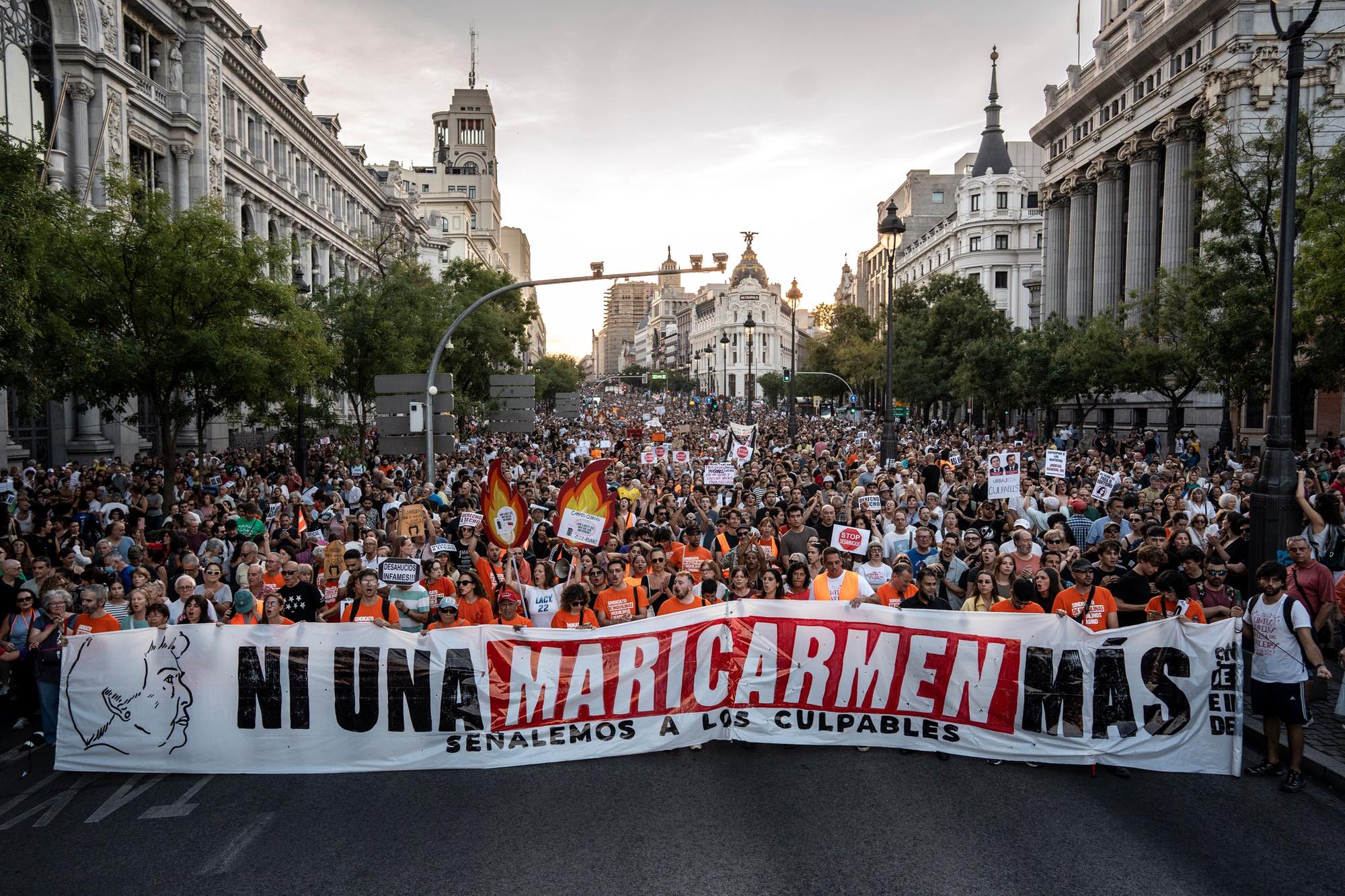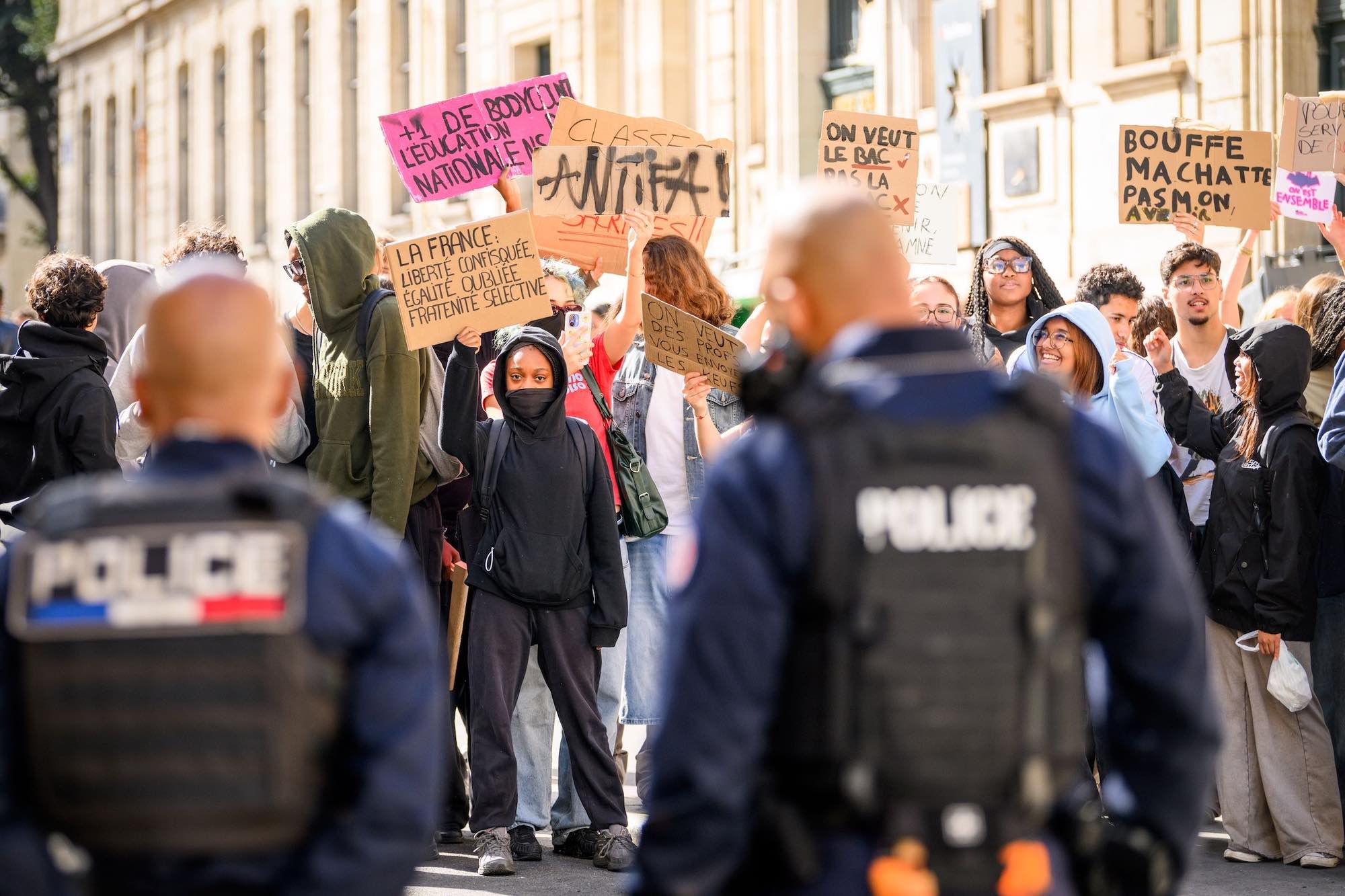
The Hot Potato Changes Hands Again
:On the 2026 Midterm Elections

Ultimately, the Democrats are no more capable of addressing the root causes of popular anger than the Republicans. State power will continue to swing back and forth between parties until our rulers consolidate an autocracy or we manage to effect revolutionary change.
As we anticipated in April, the death knell of the Trump era has rung. Despite being historically unpopular, Democratic politicians won a sweeping victory in the November 2026 midterm elections. Many are describing the rout as an “extinction-level event” for the Republican Party.
All this should feel familiar. Only two years ago, when Democrats lost the 2024 elections, pundits across the political spectrum rushed to declare the collapse of the Democratic Party. Summarizing a widespread perception, one expert claimed that
“Fundamental shifts are occurring in the body politic that have left Democrats on the wrong side of the popular vote, congressional races, and the country’s shifting demographics.”
Two years later, people are saying the same things about the Republican Party. The backlash against Republicans in this year’s election eclipses the gains they made in 2024. Yet the pendulum has been swinging wildly back and forth between parties for over a decade now—and it could be that the wildest swings have yet to come.
For all the talk of political polarization, loyalty to political parties is at its lowest in decades. Since at least 2016, anger at the status quo has been the most powerful force in politics; Democrats like Hillary Clinton and Joe Biden who attempted to present themselves as its defenders have learned that the hard way. Likewise, Donald Trump has only able to win elections when he is not in office. Whenever Trump represents the ruling order, he draws the same backlash that he once managed to channel.
Since 2014, we have argued that state power itself has become a hot potato that burns whoever holds it. In a globalized economy, in which governments can no longer mitigate the impact of capitalism on their citizens without investors taking their money elsewhere, no party is able to hold state power for long without losing credibility with voters. Similarly, the challenges of maintaining position as a waning imperial power inevitably undercut the legitimacy of whoever controls the state: just as the genocide in Gaza damaged the Biden administration’s support, Trump’s attack on Iran contributed to driving away voters.
Similar things are taking place all around the world. British politicians have also seen rapid reversals in fortune. The centrist parties that have long ruled Germany and France are in precipitous decline. One Latin American government after another has swung to the far right, but that hardly indicates a social consensus in favor of any political camp.
Only countries under continuous autocratic rule, such as Russia, Belarus, China, and North Korea, are excepted from the hot potato pattern. Donald Trump has made no secret of his desire to establish a similar state of affairs in the United States. Yet even in Hungary, which Republicans took as a model for their illiberal aspirations, the long-running autocratic government ultimately lost control. The same has occurred in Poland and, more recently, Serbia. Wherever voters have an opportunity—however narrow—to demand change, they do so—however arbitrarily and capriciously.
With no prospect of improving life for his rank-and-file supporters, Trump’s solution was to inflict violence on their behalf, offering them the vicarious thrill of watching the state cause harm to others as an outlet for their frustration. Less bread, more circuses.

Republicans and Democrats—trash and recycling.
It might have worked—if ordinary people had not courageously taken the streets to interfere. We owe Trump’s failure to those who assembled at Tesla dealerships in spring 2025, who rose up against federal agents and the National Guard that June, who confronted Immigration and Customs Enforcement mercenaries in Chicago, Minnesota, and elsewhere. As we previously saw in the movement against police and white supremacy, when people take risks in solidarity with others, this makes it possible for more people to experience empathy where previously, they only felt dissociation and apathy.
The grassroots resistance that emerged in response to the Trump administration stands in stark contrast to the way that elite figures across the political spectrum immediately put themselves as Trump’s disposal. Tech billionaires from Silicon Valley flocked to his inauguration to throw themselves at his feet. Powerful law firms, university administrations, and corporations subordinated themselves to his will. Heads of state from across the world groveled and toadied to Trump—regardless of how he treated them, no matter how absurd his demands.
Throughout 2025, Democratic politicians confined themselves to expressing opposition in purely symbolic ways, if occasionally at great length. Cowardly centrist Democrats had already embraced Trump’s anti-immigrant politics well before the 2024 election; after it, many of them actively participated in the Trump regime’s attacks on immigrants, seizing the opportunity to call for the Democratic Party to continue tacking rightward.
The scale of subsequent resistance to ICE showed that this was not hard-nosed pragmatism, but political opportunism at the service of xenophobia. A poll at the beginning of March 2026 showed that only 39% of respondents opposed abolishing ICE, with fully 50% actively calling for its abolition. The disparity between these figures and the very small number of politicians prepared to consider abolishing ICE even today shows that Democratic politicians will openly defy their supporters’ wishes in order to continue to advance a reactionary agenda. As politicians, they do not simply answer to a constituency of voters, but above all to a clientele of capitalists.
Trump did his best to rig the system in his favor ahead of the 2026 elections, arranging for widespread gerrymandering, seeking to control the voting process, and attempting to put the pieces in place to contest the results. Billionaires backed him financially—Elon Musk singlehandedly spent half a billion dollars, a quarter of the entire Republican budget for the election, in an effort to put his thumb on the scales. In the end, the results were so conclusive that none of this mattered. As in 2016, 2020, and 2024, the majority of voters rejected the reigning party.
Yet because this will was expressed via voting, rather than through more direct means, the result simply hands power to another coterie of politicians who will not address the needs of those who elected them. The more secure the Democrats’ grip on power becomes, the less they will concern themselves with the wishes of the electorate. If anything, the 2026 election will only embolden the centrists within the party, as it put power in the hands of more moderate Democrats, especially in swing districts.
But those who imagine that the Democrats did so well in the 2026 election on their own merits are fooling themselves.
The core issue at the root of the hot potato pattern is that the existing political order cannot address the instability, disparities, and crises of a capitalist system that has concentrated most of the wealth of society in the hands of a few while inflicting grievous social, psychological, and ecological damage on the rest of us. No political party will initiate the kind of revolutionary transformation that will be required to shift to a more egalitarian and sustainable way of life; such change can only come from grassroots mobilization. As long as there is no widespread, powerful social movement that offers the prospect of addressing these problems through profound change, people will continue rejecting one government after another in increasing desperation.
Silicon Valley tech moguls—who backed Joe Biden in 2020 only to switch sides in 2024—are even less popular than Donald Trump. Hatred of tech billionaires, data centers, and Flock cameras cuts across political lines; like the war on Iran, it is one of the factors that caused many former Trump voters to stay home or vote for Democrats. Yet as they regain their hold on power, Democrats will be inclined to work more and more closely with capitalists and the tech industry, rhetoric about “oligarchy” notwithstanding.
If social movements die down again as they did in 2021 after Biden took office, this will bode ill for the future, opening the way for even more extreme far-right reactionaries to pretend that they represent the only alternative to an unendurable status quo. If the cycle that played out between the first and second Trump administrations repeats itself again, the third iteration of far-right reaction will be more horrific than we can possibly imagine.
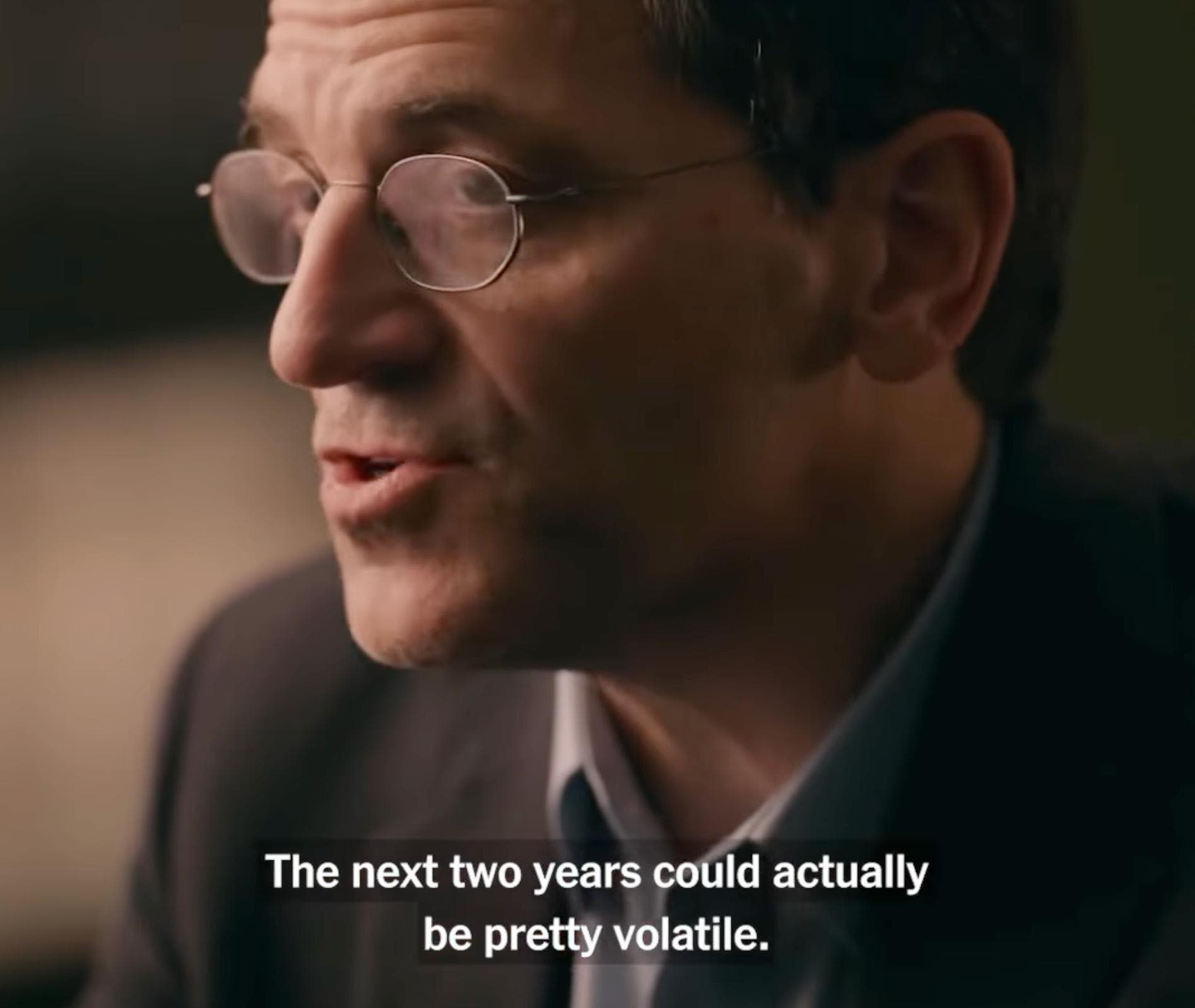
For good or ill, it does not look like anyone will be able to delude themselves into believing in a “return to normal” any time soon. The accession of Stephen Miller, an avowed white supremacist, to White House Chief of Staff sets the stage for the Trump administration to conclude with a period of brutal, open conflict. The administration lacks the support to win an open power struggle with the rest of society, but has left itself no alternative. As one New York Times commentator put it, “The next two years could actually be pretty volatile.”
As long as Trump remains in power, the far right will be perceived as the hegemonic force against which social anger will gravitate. But we must not wait for Democratic politicians to stand up to the Trump administration; even if they did, at best, that would function to relegitimize the same state institutions that will once again be turned against us in the future—as we saw in the Democrats’s response to the failed coup of January 6, 2021.
We must set an example by continuing to resist the Trump administration—and, wherever necessary, Democratic local and state administrations as well—through grassroots direct action. Rather than simply waging a defensive struggle, we must figure out how to take proactive steps towards a completely different way of life in the process. Otherwise, the far right will eventually benefit once again from the inevitable disillusionment with Democratic administrations.
In short: it’s good to see Trump losing control. But the pendulum will continue to swing back and forth between political parties in wilder and wilder oscillations until we make revolutionary changes in our society.