Tactics at Delaney Hall: A Strategic Appraisal
:With Interviews from the Front Lines


Starting on May 22, a hunger and labor strike inside Delaney Hall Detention Center in Newark, New Jersey catalyzed daily demonstrations outside the facility, creating the most visible flashpoint in the fight against the brutality of Immigration and Customs Enforcement since the fight in Minnesota in early 2026. Here, we offer an appraisal of the tactics that protesters have employed outside Delaney Hall, anonymously provided by participants, followed by two interviews exploring the events in detail.
Photographs by Talia Jane.
Tactics at Delaney Hall: A Strategic Appraisal
The struggle to free the detainees from Delaney Hall in Newark, New Jersey has become the most significant sustained inside/outside protest movement at a detention center of Donald Trump’s second term. On May 22, 300 detainees launched a hunger and labor strike to demand their release. Supporters immediately mobilized outside to support them. For days, people rallied yards away from the building in which GEO Group holds approximately 1000 detainees captive under contract with the Department of Homeland Security. On May 27, viral videos showed ICE and private GEO Group security bludgeoning protesters outside Delaney Hall and pushing one man under an 18-wheeler, crushing his leg. Nonetheless, protesters bravely pushed back. Over the following days, more people rushed to the facility.
For the first week of demonstrations, state and local law enforcement kept their distance. The weekend of May 29-31 marked a shift in the struggle at Delaney Hall, when New Jersey Democratic politicians Governor Mikie Sherrill and Mayor Ras Baraka deployed State Troopers and Newark Police Department to assist ICE and corral the protest. The collaboration of state law enforcement with ICE and GEO Group led to a much larger police presence outside the facility, coinciding with the largest protests outside Delaney Hall yet. In the following analysis, participants in that struggle recount the experiences on the ground Friday, Saturday, and Sunday, offering tactical reflections on how the protesters moved that weekend, followed by strategic reflections for the movement in general.
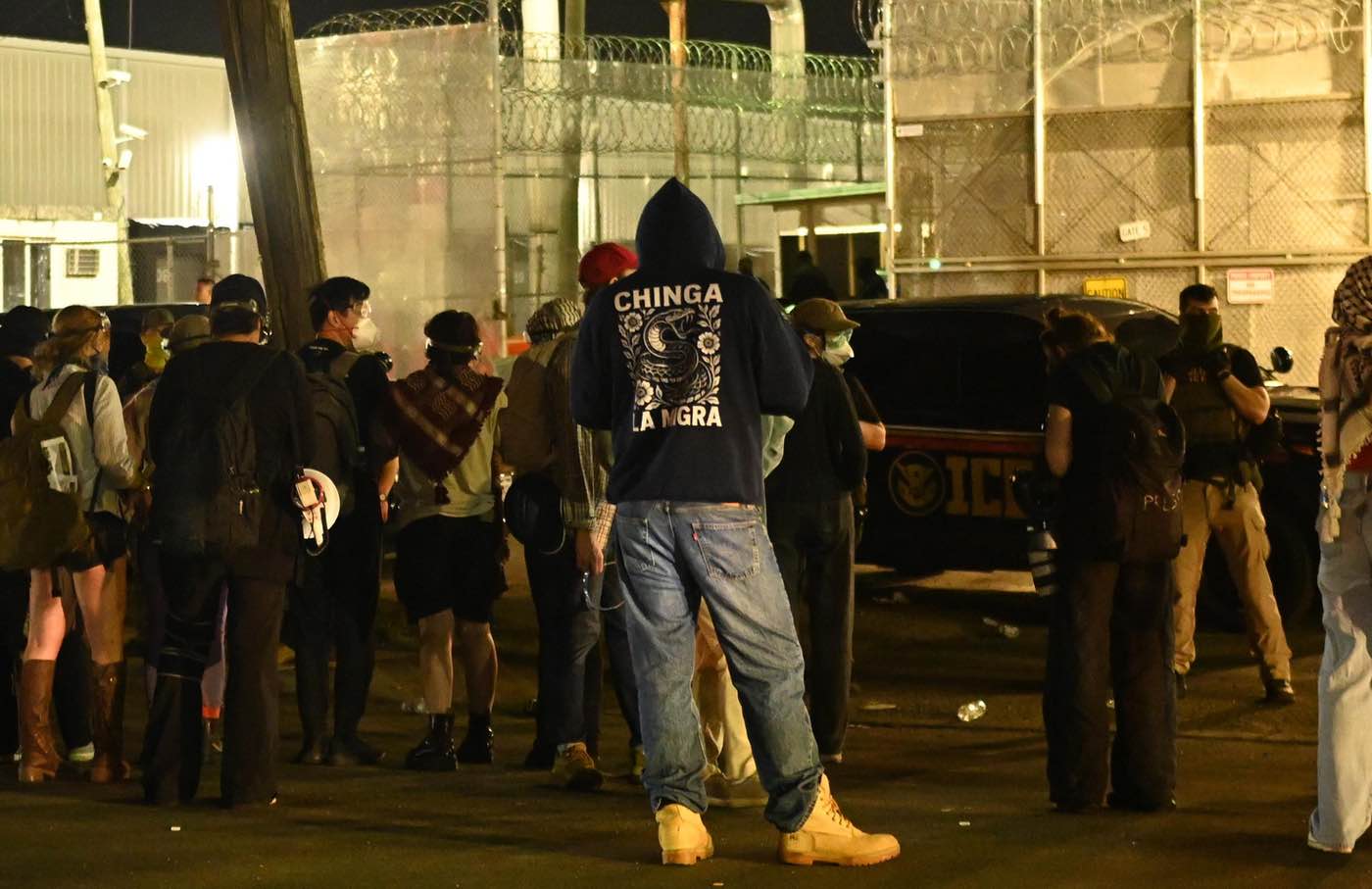
Chinga la migra. Fuck Border Patrol.
Friday, May 29
For the first seven days of the hunger strike, a combination of ICE agents and GEO Group employees policed Delaney Hall. On Friday, May 29, Newark Police Department and New Jersey State Police were deployed to manage the protest. Early in the day, Newark Police Department established vehicle checkpoints at the north and south intersections of Doremus Avenue, limiting car traffic to commercial trucks and ICE vehicles. Protesters could access the front entrances of Delaney by foot. By nightfall, the crowd had grown to about 150 people.
Shortly after 9 pm, New Jersey State Police issued the first dispersal order. Ten minutes later, a line of fifty riot police advanced toward Delaney Hall. Protesters dragged steel barricades into the street; state troopers immediately absorbed these and tossed the barriers behind their advancing line. Riot police deployed tear gas in an effort to push back the crowd. From the main driveway, two dozen ICE agents shot pepper balls into the crowd.
The riot line parted to let a half-dozen mounted officers into the crowd; they successfully used the horses to push protesters onto the sidewalk and past the south gate, away from the facility. It became clear that this maneuver was preparatory: shortly thereafter, eight ICE vehicles drove through the crowd, past the riot line and into Delaney Hall.
State police and protesters then entered a stalemate. Police held the road without deploying munitions; the crowd stared them down, but took no new initiatives. After about twenty minutes, once ICE completed its shift change, police covered their retreat by firing flash-bang grenades, tear-gas canisters, and pepper balls into the crowd.
With the riot police dispersed, protesters quickly returned to the front of Delaney Hall. A few individuals dragged steel barricades in front of the active driveway. ICE agents immediately emerged, shot pepper balls into the crowd, and dragged the barricades inside the gate. Further up Doremus, protesters erected more steel barricades and reinforced them with paving stones. Despite these efforts, ICE successfully escorted four vehicles out of the facility.
The night concluded with no further intervention from state police. One protester used a paving stone to crush the windshield of a parked ICE SUV. A brief skirmish broke out between protesters and a far-right TikTok influencer, after which armed security escorted him inside Delaney Hall. ICE agents stayed behind the retractable driveway gates. The crowd spent the final hours milling about.
Friday: Tactical Review
Barricades: Protesters repeatedly deployed barricades with little forethought as to how to make use of them. In some cases, the consequence was that the State Police or ICE were able to immediately seize them. Only later, after failed attempts to deploy barricades directly in front of Delaney, did some people erect a reinforced steel barricade further up the road, out of the direct reach of ICE agents. However, as the crowd remained concentrated by the driveway, several ICE vehicles were able to clear that obstacle with ease.
Idle Time: Ideally, one should arrive at a protest equipped to take action, with the goal of altering the course of events for the better. Instead of merely attending the demonstration, individuals or crews should actively intervene and inspire others to do the same. The attempts to make barricades, the damage to the ICE vehicle, and the confrontation with the TikToker were gestures in that direction. However, aside from those few instances, which did not galvanize the crowd to action, most of the evening’s activity could be described as “milling around.” The abundance of idle time, especially in the absence of law enforcement, suppressed the crowd’s potential and momentum.
Proximity to Delaney Hall: We should not take for granted the opportunity to be able to get within feet of a facility like Delaney Hall. The detention center sits along a sidewalk accessible to protesters, moderately protected by chain-link fence. After the State Police retreated, there was a multi-hour window during which people could have modified the façade of Delaney Hall. This opportunity diminished after Friday night: new fencing was installed around the driveway, state and local LEO began guarding the facility, and for two days, access to Delaney was blocked altogether.
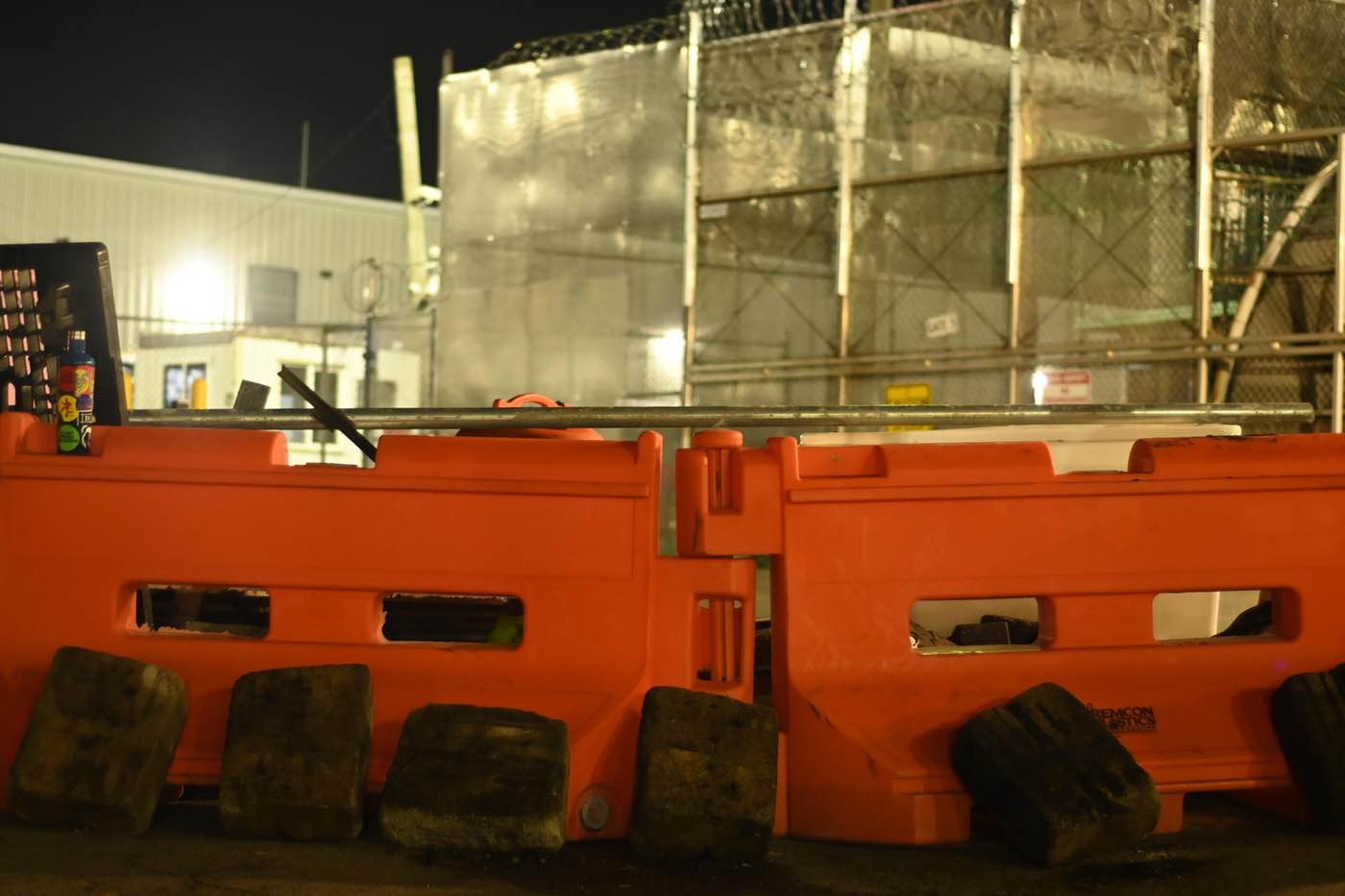
A barricade protesters built in the days before the local and state police established control around the facility.
Saturday, May 30
Saturday night began with a scuffle. By 9 pm, approximately 250 protesters had assembled; the majority of them were equipped with gas masks, goggles, and helmets. They initiated a ten-minute tug-of-war with New Jersey State Police by pushing up against the steel barricade perimeter that had been constructed in front of the facility’s main gate. Eventually, protesters broke the barrier into two sections. The police retreated into the facility’s driveway, but the crowd did not advance on the building. Instead, it stepped back onto the sidewalk.
Some protesters re-appropriated the barriers to form a barricade in front of a line of riot police forming just south of the facility. As they had the night before, police quickly removed the barriers and shot tear gas canisters and flash-bang grenades. The crowd fell back immediately. As the riot line advanced, protesters took up the remaining barricades and managed to push the police line back a few feet by shoving the barricades against the shields of the riot police. This was the only point in the night when the crowd was able to advance. The police broke the barricade at its weakest point—as there were only about a dozen people on the front line and they were spread thin—by bludgeoning protesters and deploying more flash-bang grenades.
At the same time, a new unit of riot police marched in via the railroad tracks south of Roanoke Avenue. Filling in behind the existing riot line, they increased its depth by two to three officers and expanded it across the entire road. The rest of the night is best described as a rolling retreat.
Two hundred riot police deployed a combination of pepper balls, flash-bang grenades, and tear gas canisters, both tossing the tear gas canisters and shooting them behind the front lines of protesters. Some protesters equipped with traffic cones and water bottles extinguished the canisters and kicked them back at the police; in one instance, protesters redirected the tear gas at the correctional officers loitering in the Essex County parking lot. The crowd continuously threw up barricades—dragging together jersey barriers, planks of wood, and abandoned trash—but were not able to fortify or defend them. Protesters maintained an average distance of 100 feet from the police line.
At one point, a convoy of five vehicles was allowed through the checkpoint on Roanoke. The majority passed through the line of riot police without issue. The crowd swarmed the final car, which was tinted out with California plates. It accelerated forward; the police barely opened their line in time to let it through. There was a splash of glass as it passed.
During their final advance, the police line parted to let nine mounted units out into the crowd. They spread down Doremus in a flanking formation, rotating to push protesters onto the sidewalk. Two individuals leaped into the street to disorient the horses by waving makeshift shields and flashing bright lights in their eyes. This worked, albeit only temporarily. The crowd scrambled, then continued in slow retreat.
The crowd retreated for ten minutes before the riot line assumed the stationary position that it maintained for the rest of the night. The crowd was spread out and thinning, 100 to 200 feet away from police. Fifteen minutes into this standoff, about 100 feet behind the line of protesters, someone ignited a flaming barricade assembled from tires, traffic cones, and debris. The majority of the protesters dispersed around 12:30 am. Mayor Ras Baraka retroactively instituted a curfew.
Saturday: Tactical Review
Tear Gas: The prevalence of gas masks and goggles prepared the crowd to endure chemical dispersants. The crowd generally succeeded in tracking and neutralizing tear gas canisters. A small team with traffic cones and water bottles reliably followed the canisters and extinguished them; many other people kicked tear gas canisters back at police or away from the crowd. However, the crowd fell back at least 100 feet nearly every time officers deployed tear gas and flash-bangs, as the officers surely intended. It would have been preferable to remain close to the front line in order to retain offensive capacities.
Protester Barricades: We should appraise the value of a barricade by what it renders possible. Protesters threw up at least three barricades, but none of them significantly slowed the police line, nor were they ever fortified enough to do so. To accomplish that, protesters would have needed to maintain the initiative after deploying the barricades and immediately launch a new offensive. Instead, the protesters hung back after deploying them. Every moment spent in a staring contest with law enforcement is momentum ceded, enabling the state to determine the next move.
Flaming Barricade: The bonfire was an act of initiative on the part of the demonstrators. However, it occurred too late in the protest, which was essentially over by the time the fire was lit. At that point, the protesters had been pushed as far back as they would be by riot police and had been in a stalemate of inactivity for fifteen minutes. Because this took place at the end of the evening’s events, during a lull in activity, and with a dwindling crowd, it could not regenerate momentum. If fires had been lit earlier, they might have strengthened barricades against riot police and galvanized the energy of the crowd during the peak of the skirmishes.
Projectiles: The only way to push back a police line is to advance on it. It would have been possible for a few people to collect a few boxes of rocks from the nearby railroad tracks, encourage the crowd to tighten up, and then throw projectiles at the riot line. The crowd likely wouldn’t have regained much ground, but this would have slowed its retreat. Better prepared demonstrators might have packed fireworks.
False Dispersal Order: Near the end of the night, when the fire was burning lower, one individual took a megaphone and informed the crowd that they were being kettled from the rear. This was not true: nothing had changed at the north entrance. A few protesters fact-checked this detail and updated the crowd, but the announcement still induced panic. A number of people chose to disperse, including all of those marked as medics. A basic scouting system could have decreased the crowd’s susceptibility to fear and false information.
Artwork: Saturday’s activities amounted to a slow, rolling retreat, but the imagery that circulated was evocative and inspiring to those watching the struggle from elsewhere. At one point, anti-ICE graffiti appeared on the corrugated metal wall of a nearby business. Because artwork that appears in situations like this is often immediately broadcasted across the country, it offers an opportunity to offer slogans providing strategic direction.
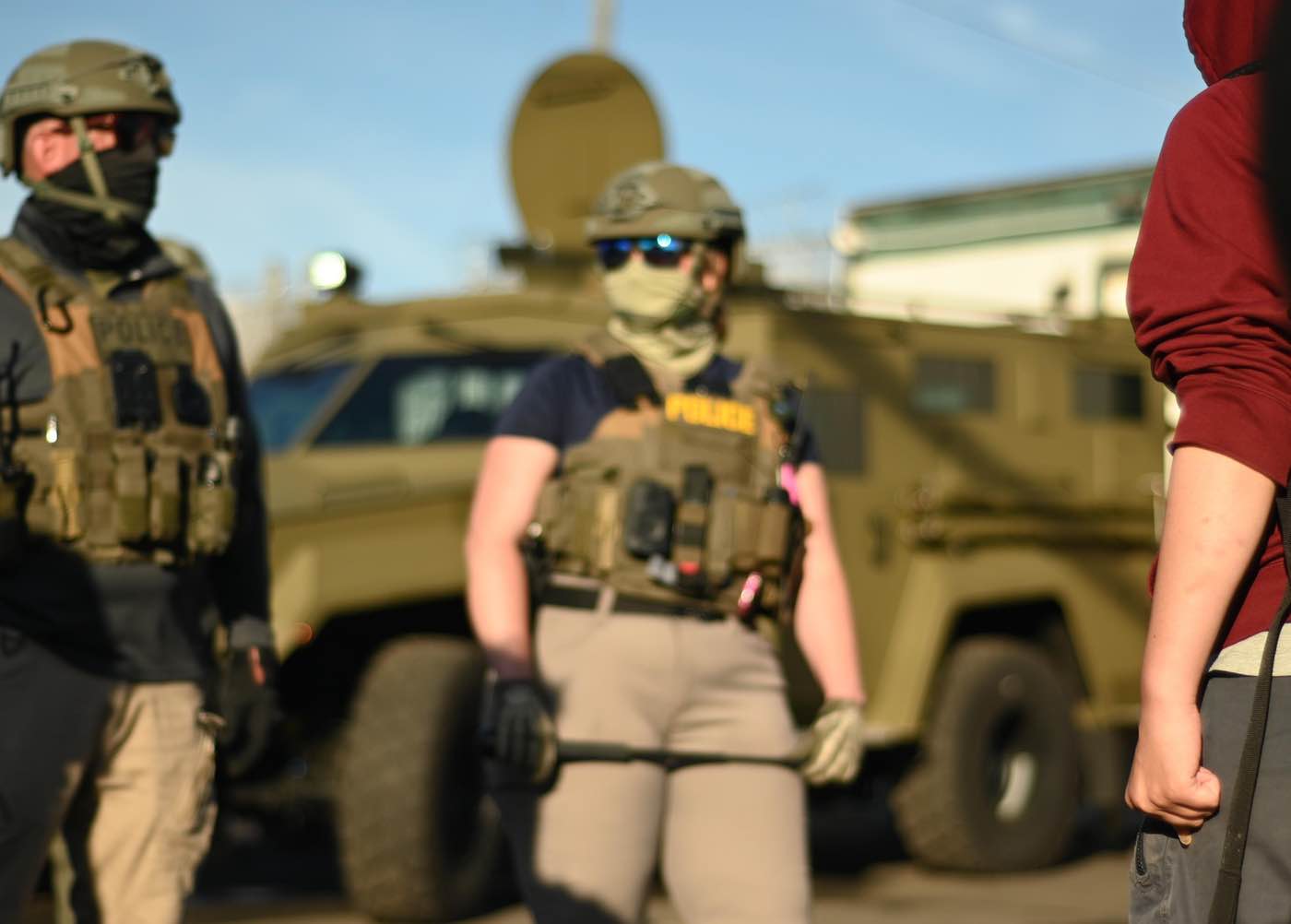
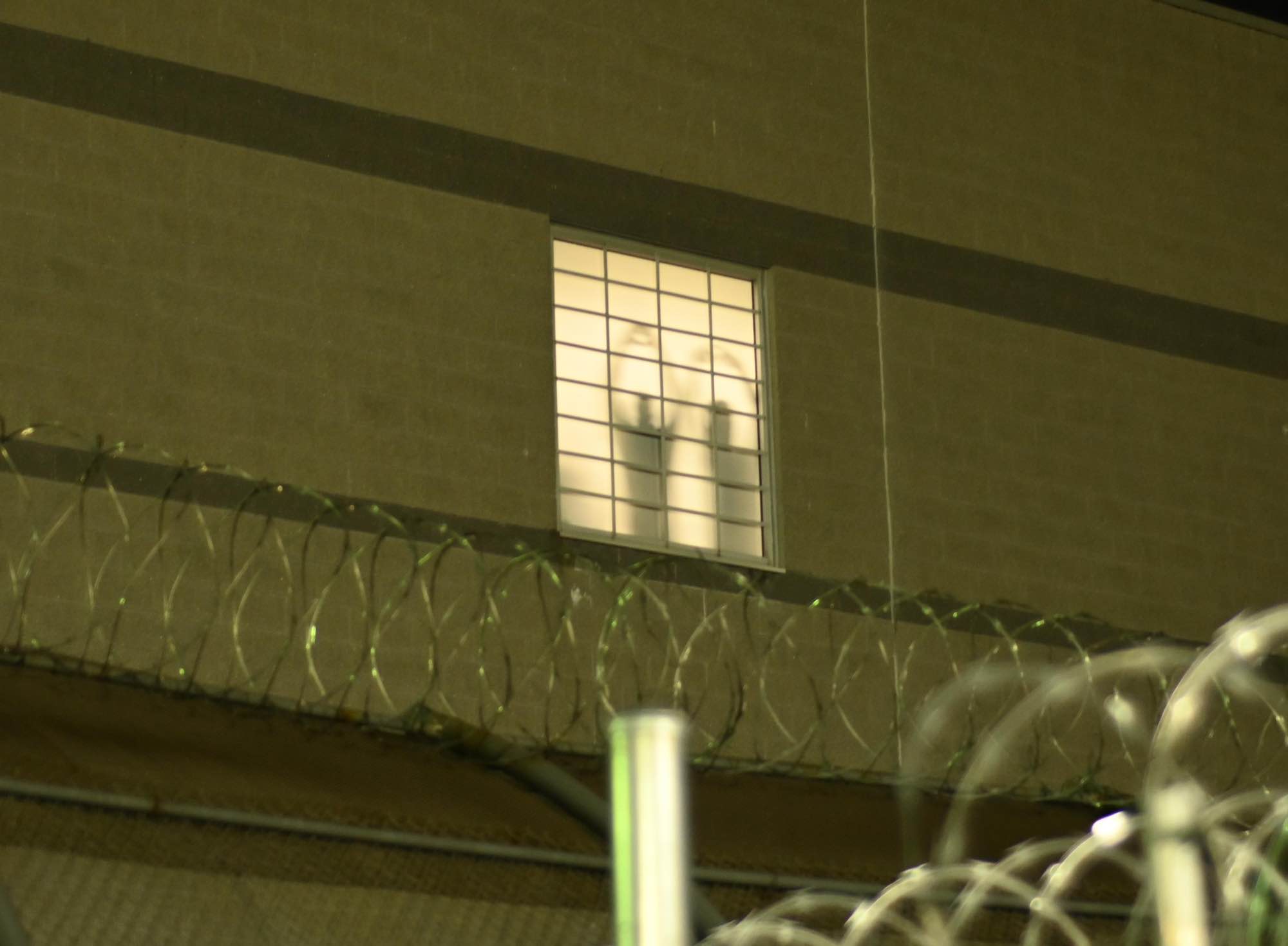
Clenched fists versus police batons.
Sunday, May 31
Sunday was the first night that the curfew was in effect. The police expanded the vehicular checkpoints of the previous days, reinforcing the Roanoke entrance with multiple squad cars and portable vehicle barriers and blocking off the entire length of the Wilson entrance with zip-tied steel barricades. Foot traffic on Doremus was prohibited.
At 8:50 pm, there were roughly 100 protesters gathered at the Wilson intersection. The medics began packing up their supplies. A few individuals spread fear in the crowd, attempting to persuade everyone to disperse. At 9 pm, the police issued a dispersal order. It was unclear whether the intersection lay inside or outside of the half-mile curfew “zone.”
Around 9:15, a mounted unit of ten state police horses deployed out of the New Jersey Transit parking lot west on Wilson. The crowd rushed towards them. At the same time, riot police deployed from farther down Doremus to form a line across the intersection. The combination of these two forces pushed protesters onto the sidewalk at the southwest corner.
A third of the crowd dispersed down Wilson, followed by low-flying drones. Officers in vehicles with tinted windows shone bright flashlights at outbound traffic to intimidate the occupants. Police set up additional checkpoints along the exit routes, at first stopping drivers for violating curfew. Ultimately, they permitted these cars to leave.
Riot police kettled the 64 protesters who remained at the intersection. They were booked at Essex County Correctional Facility, adjacent to Delaney Hall within the curfew zone.
Sunday: Tactical Review
Dispersal of the Medics: A handful of people demobilized the crowd by announcing that medics were leaving the scene. It was not clear whether the medics were speaking for themselves, how or why they made that call, or what their relationship was to those seeking to persuade people to leave. In any case, it is odd that a support role would be treated as a de facto tactical lead: the idea was that if the medics retreated, we should retreat, too. It makes sense that some people would feel less resilient without medics after experiencing everything from chemical munitions to bone-breaking beatings at the hands of GEO Group, ICE, and State Police. Regardless, it is worth considering whether the decisions of medics should determine what everyone else does.
Knowing When to Call It: It was immediately apparent that the balance of forces was not in the protesters’ favor. When officers issued the dispersal order, less than a hundred people lingered by the barricade, a significant proportion of which were press. The State Police behind the barricade matched the protesters almost one to one. When a bus of riot police arrived farther south, seizing the space behind the protesters, and mounted State Troopers descended from the west, there were limited options. A police force twice the size of the protest took over the whole intersection and announced a dispersal. Police cars started forming perimeters further up the street to close and monitor traffic. While it always feels disempowering to leave, protesters probably should have done so at that point. All other things being equal, when one has the opportunity, it is better to stay out of the bureaucratic legal process in order to keep one’s hands free to fight another day.
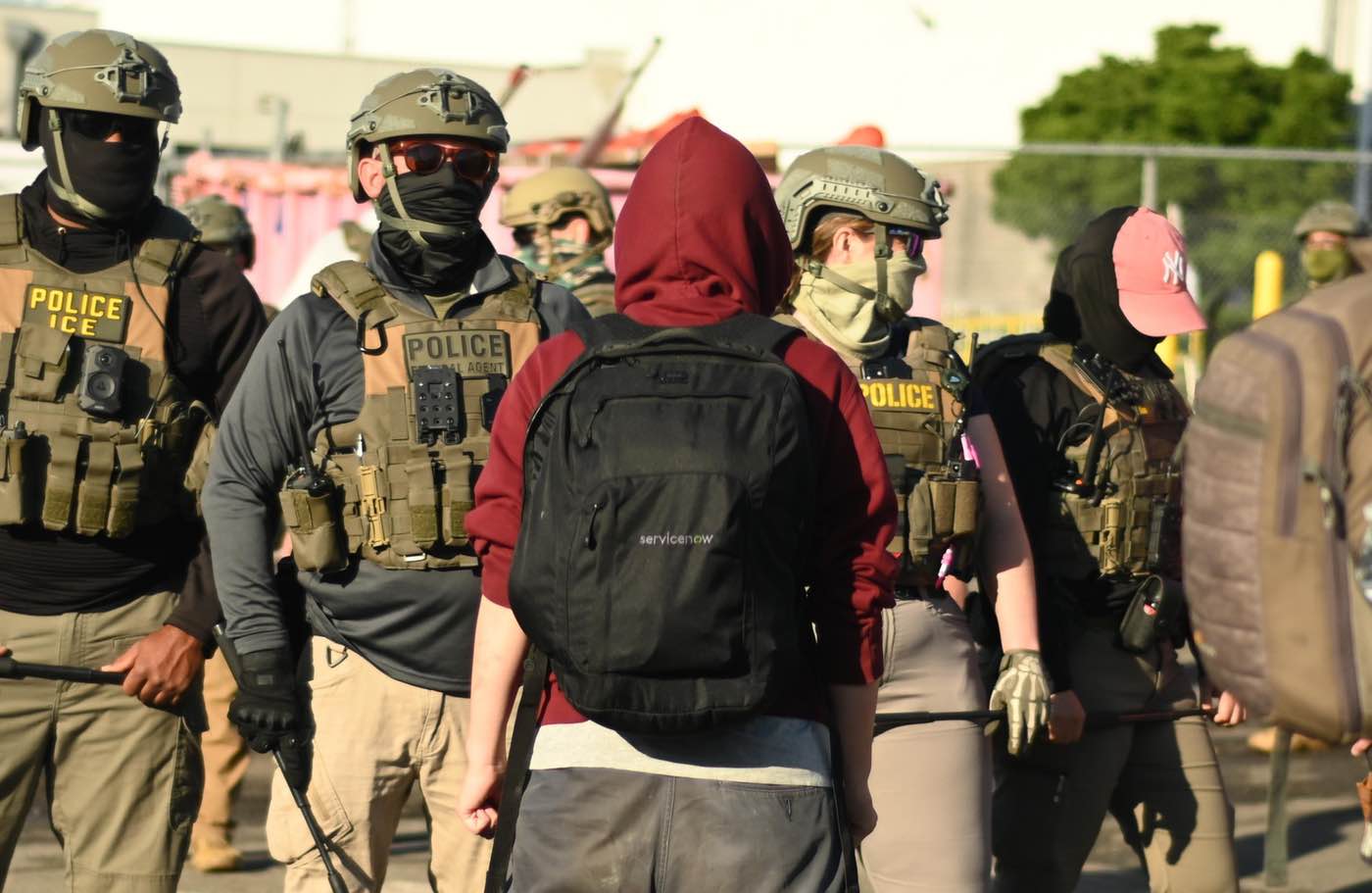
Strategic Reflections
Above, we suggested tactical improvements that the crowd could have implemented during the specific events of each day. Below, we offer strategic proposals based on recurring dynamics across the days of struggle outside Delaney Hall.
Hone the Ability to Metabolize Tactical Lessons
Participants in protests should sensitize themselves to the difference between actions that feel productive and actions that advance towards desired outcomes. We should always strive to influence our environment and learn faster than circumstances change. Doing so requires participants to communicate simply and effectively with each other, to take and maintain the initiative, and to take responsibility for maintaining the cohesion of the crowd. So far, the protests outside Delaney have not been able to metabolize lessons rapidly enough to keep up with events. The mis-application of barricades, the repeated slow retreats, and the lack of cohesion in stopping vehicles highlight this.
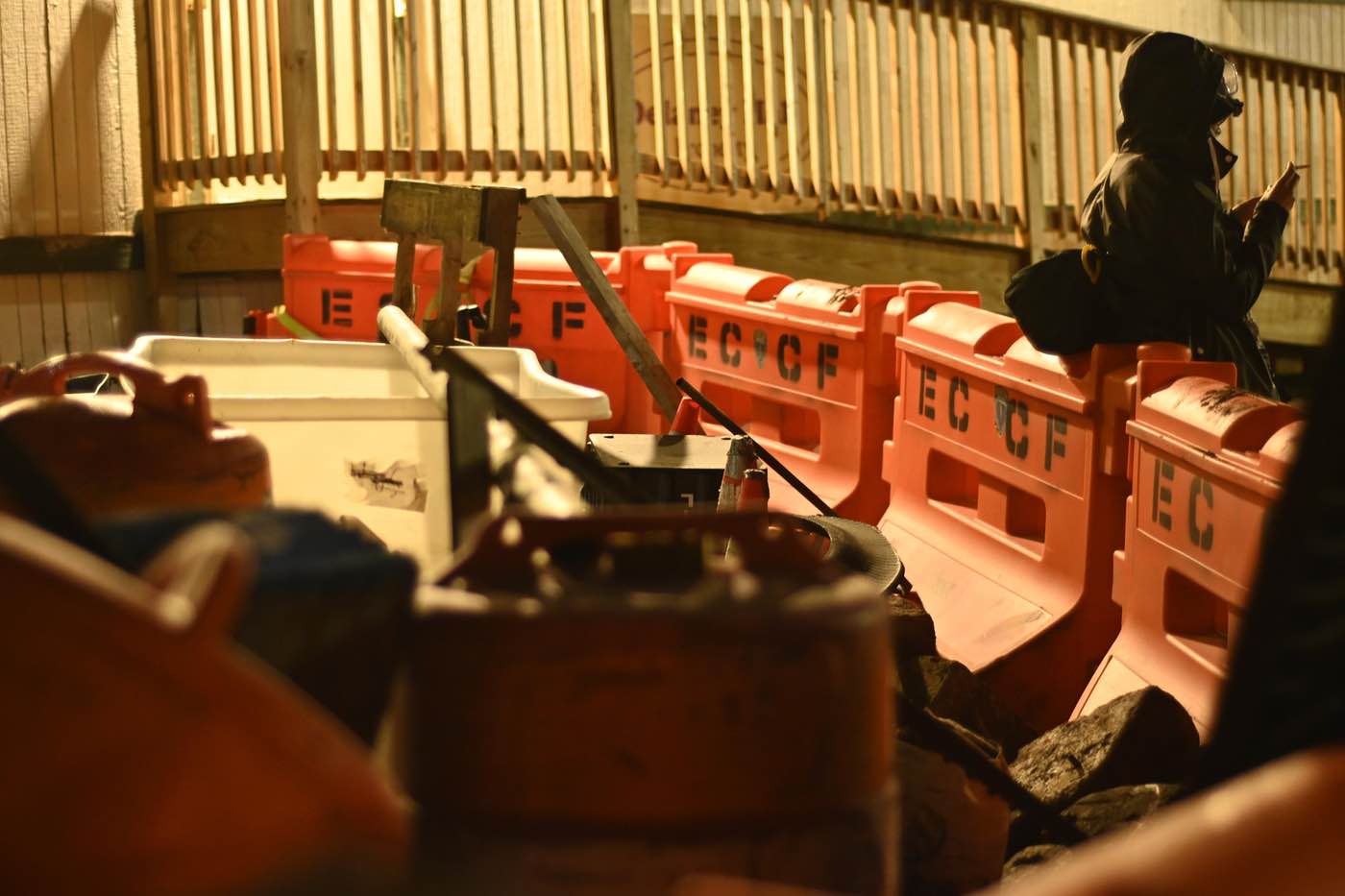
A barricade protesters built in the days before the local and state police established control around the facility.
Devise a Strategy and Expand the Popular Imagination
The implicit objective of the crowd has been to prevent ICE vehicles from entering or exiting the facility. One of the early efforts to break the strike involved transferring suspected leaders out of Delaney Hall to other detention facilities; blocking vehicular traffic presented itself to protesters as an effective response. This same tactic was employed last summer in New York City as part of an effort to prevent the removal of detainees from 26 Federal Plaza in Lower Manhattan. Protesters attempted to create chokepoints by throwing debris into the intersections surrounding the immigration courts as ICE vans were leaving.
Despite the persistent desire to block traffic, it is not clear what the larger goal is besides making ICE operations more costly in general. The crowd has been largely unsuccessful at blockading entry and exit to the facility. When protesters have surrounded ICE vehicles, they have usually simply banged on the car; on a handful of occasions, they have broken a window. Otherwise, the crowd has been ill-prepared to disable vehicles despite the apparent desire to do so. The crowd’s inability to pivot on the ground is symptomatic of a broader strategic vacuum.
One sometimes whispered-about, but largely unspoken desire is to breach the facility and liberate detainees. The appetite for this is apparent, but unrealized; desired, but doubted. It is worth identifying this horizon outright. So long as it remains unspoken, it will be impossible to determine the level of organization that it would take to make this happen or to acknowledge the concrete limits of the current protest tactics.
John Brown’s raid on Harper’s Ferry; the liberation of Assata Shakur; the siege of the Third Precinct in Minneapolis; the March 5, 2023 raid that damaged the Cop City construction site in Atlanta—such actions remind us what we are capable of. It is our duty to make daring plans together. One year ago, detainees inside Delaney Hall did just that when four people broke through the walls and escaped. It is humbling to fight at the site of a recent jailbreak; it is our responsibility to bring down the walls.
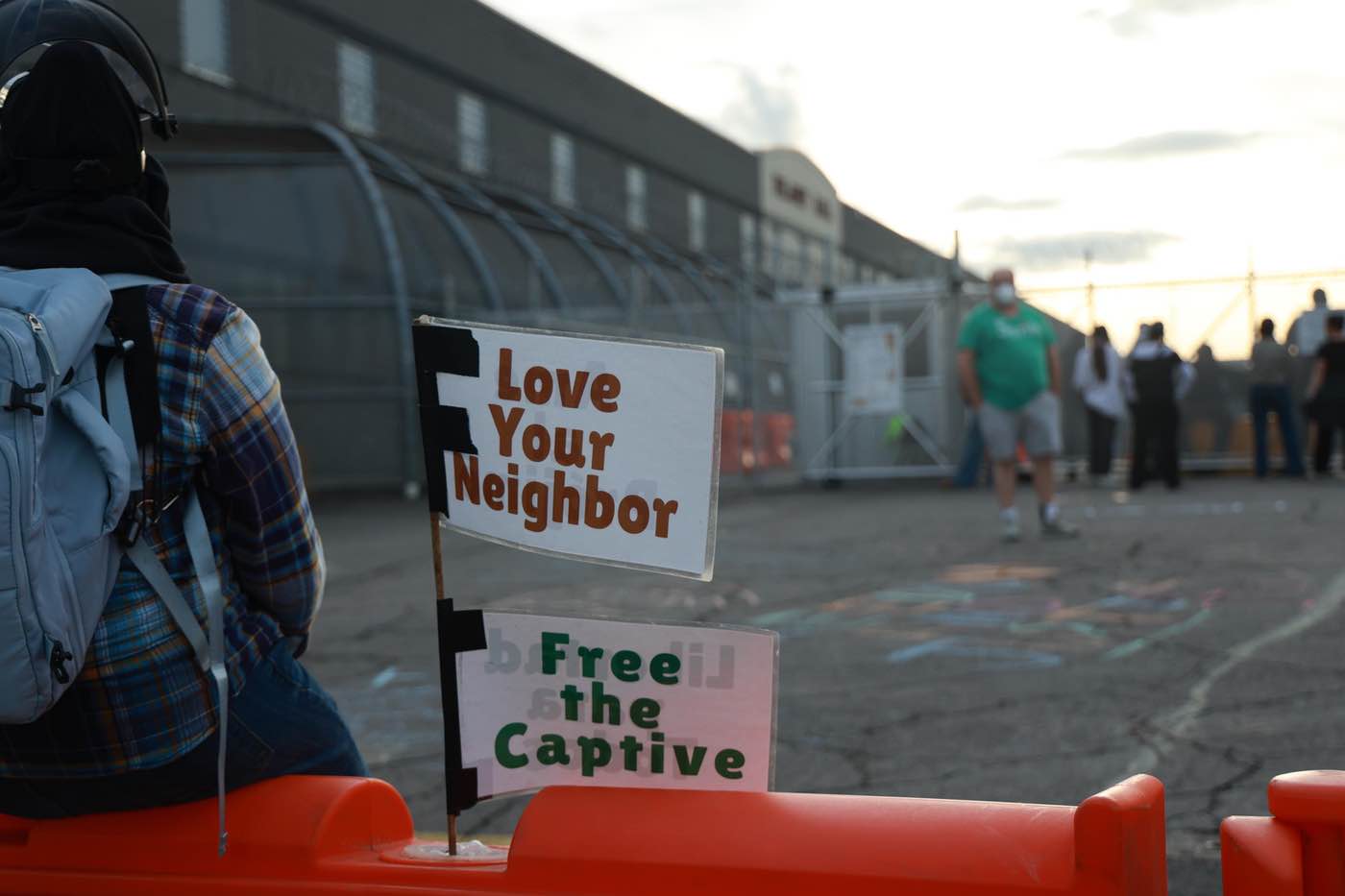
Love your neighbor; free the captive.
Monitor and Exploit Political Tensions
Our movement has more strategic opportunities when we face a disunified adversary. This was the case for about a week as the movement outside Delaney Hall grew. During that time, New Jersey Democrats and DHS agents were openly hostile to each other. Democrats were routinely denied entry into Delaney Hall; they were surprised that ICE treated them as protesters, not colleagues within the ruling class. ICE arrested Mayor Baraka for trespassing, charged Congresswoman LaMonica McIver with assaulting a federal officer, and pepper-sprayed Senator Andy Kim point-blank.
During that time, New Jersey police were not deployed to Delaney. For a week, protesters clashed directly with ICE and GEO Group without interference from state or local law enforcement. A similar tension between state and federal agencies offered a key opportunity for resistance to the ICE to accelerate during the first two months of Operation Metro Surge in Minneapolis. While the New Jersey governor and mayor did ultimately unite with ICE against protesters for the weekend, they have since wavered due to popular backlash.
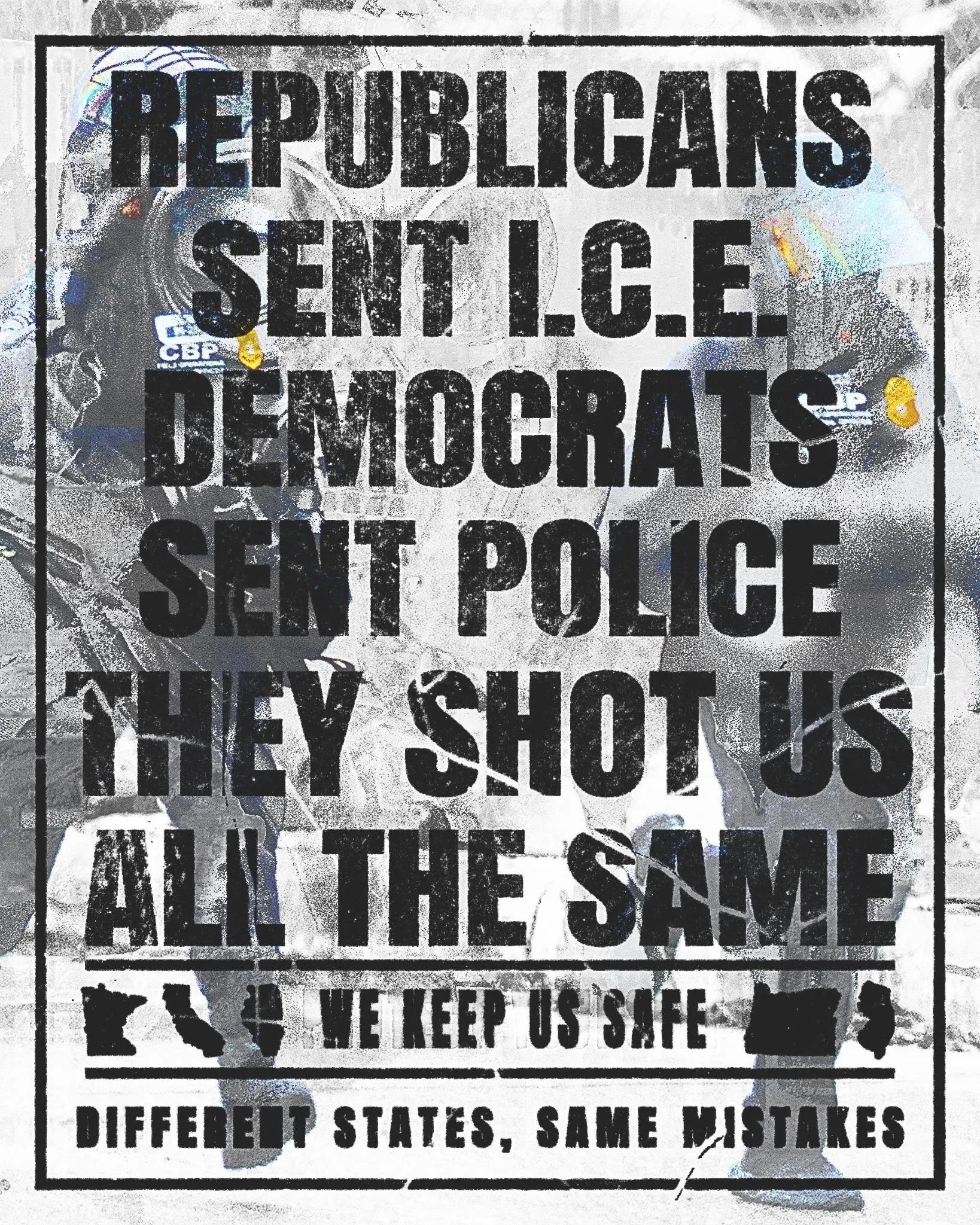
Denouncing New Jersey state police, the Minnesota 50501 chapter posted a graphic on social media reading, “Republicans sent ICE. Democrats sent police. They shoot us all the same. Different states, same mistakes.” Shortly after, the mayor of Newark admitted to excessive and even “unconstitutional” use of force against protesters and suspended the curfew. By June 4, Baraka announced that Newark Police would further scale back their presence at Delaney, stating “It is not the responsibility of the Newark Police Division to secure a private facility. It is a clear contradiction to the City’s position with GEO group to remain there.”
Democrat collaboration with ICE is not a foregone conclusion. It is unevenly expressed, occasionally delayed, and takes place despite the opposition of much of the party’s voter base. Any further fractures in the Democratic coalition, especially if they cause even a brief absence of law enforcement, will expand our opportunities.
Conclusion
After the major metropolitan ICE surges of Midway Blitz and Metro Surge, the battles inside and outside of Delaney Hall have once again directed countrywide attention to the struggle against ICE. For now, however, resistance movements lack strong organizational models to enable us to metabolize lessons, strategize, and launch stronger attacks. In the absence of those, people simply converge on spaces where they see combative actions occurring on a regular basis.
Hundreds of people outside Delaney Hall and tens of thousands around the country have demonstrated tremendous courage by confronting ICE directly. Yet just as militants should not arbitrarily limit ourselves to on-the-ground tactical interventions while leaving larger political and organizational tasks to NGOs, we should not let the way that spaces of conflict currently stand in for forms of organization lock us into narrow territorial struggles. Rather than letting pitched battles over specific spaces stand in for collective strategizing, we need to create opportunities for those who have been transformed by this struggle to develop more audacious strategic goals and find the tactics to match them.
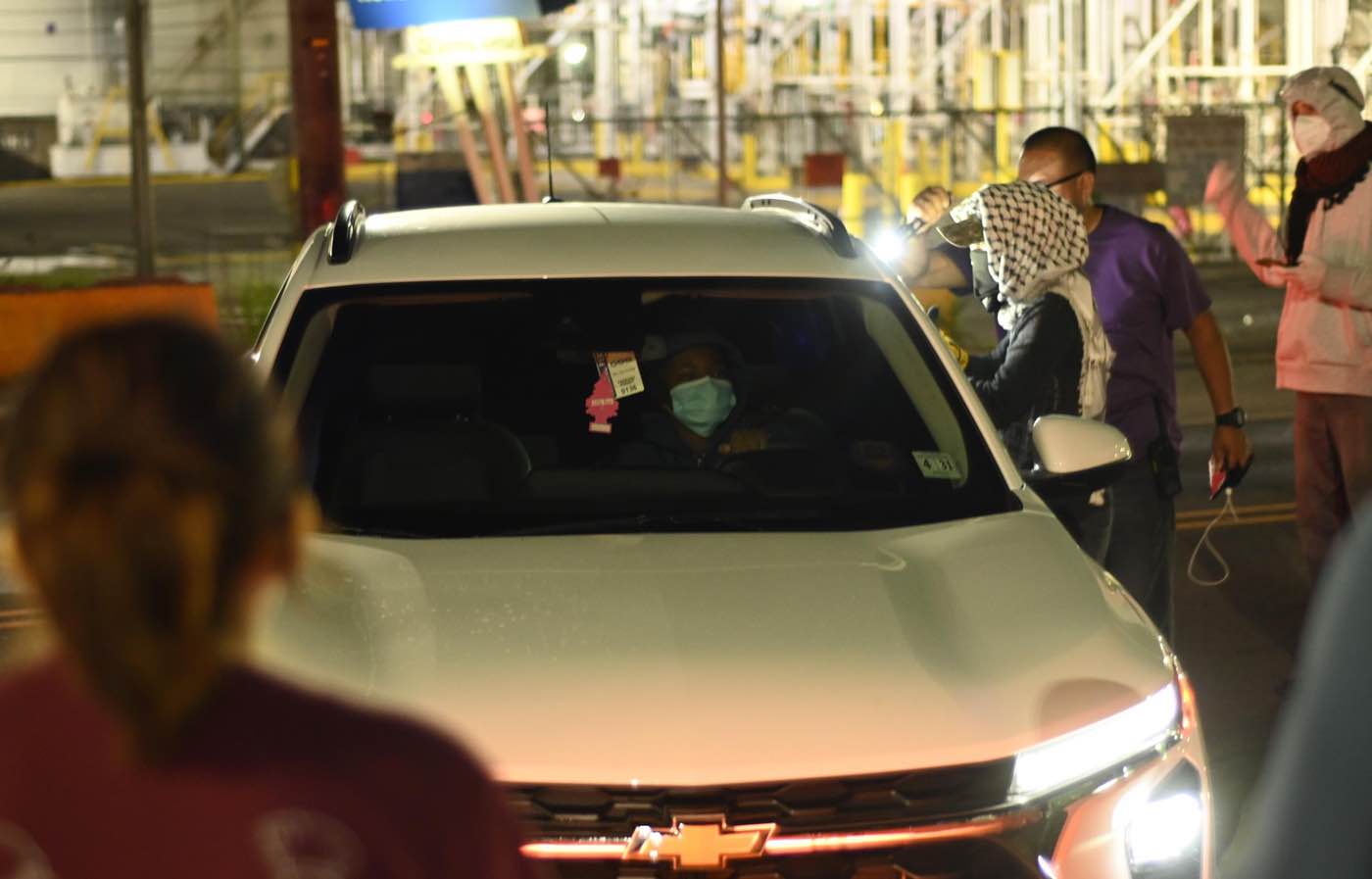
Protesters conducting a car check early in this wave of protests, before local and state police got involved and shifted the balance of power. The only thing we can ask for from any institution of authority is to stay out of the way.
Appendix I: Interview with Talia Jane
We interviewed Talia Jane, a journalist who has witnessed many of the protests outside Delaney Hall.
A year ago, riotous demonstrations took place outside of Delaney Hall as an uprising inside the facility enabled several detainees to escape. What has happened since then?
Over the past year, volunteers have worked around the clock to provide support to people newly released and the families of people detained at Delaney Hall. Those advocates have been attempting to raise awareness of conditions inside the facility, with little support. It was people detained inside self-organizing in protest against their conditions that set the spark that led to a surge in support.
That support soon shifted toward direct action (attempting to block entering and exiting vehicles), which led to ICE agents attacking demonstrators, which sparked an even bigger surge in support. All of this organizing has been happening with a backdrop of growing discontent with ICE’s violent, fascist attacks on neighbors across the country.
That served as a powder keg. People had been waiting for things to cross a certain line until the conditions outside Delaney Hall matched scenes they had been seeing in Minneapolis, Portland, Chicago, and Los Angeles.
Several hundred people at Delaney Hall launched a work and hunger strike. Tell us what you know about the strike and how people have been responding on the outside.
The strike has been a point of fixation for DHS, which continues to insist there is no hunger strike. This is intentionally dishonest. The hunger strikers avoided eating as much as possible. I observed one ambulance wheeling someone out, who smiled but looked frail, at day five of the hunger strike.
The hunger portion of the strike has now ended, and I’m told that ICE has threatened to pursue charges against those refusing to eat, which would jeopardize their immigration cases. Since then, many more people have been wheeled out into ambulances. Volunteers have speculated that this is due to physical abuse committed by guards and ICE agents.
Over the past two weeks, hundreds of people have been mobilizing in solidarity outside of Delaney Hall. We’ve seen blockades of ICE vans and barricades. A few days ago, the removal of Martin Soto, one of the detainees on hunger strike, was temporarily halted. Tell us what has been happening in the streets outside of Delaney Hall.
Outside of Delaney Hall, there has been a battle between the state and the people in a multitude of ways: Demonstrators organically began attempting to block vehicles and barricade access to the facility.
With access now barricaded by DHS/GEO Group, demonstrators continue trying to add friction to ICE operations. DHS and FBI agents were documented inside a white tent that volunteers use to provide aftercare to newly released people and families visiting their loved ones. The tent was trashed, with mace reportedly sprayed all over medical supplies—a war crime. Volunteers are continuing to try to clean and repair the space for family and aftercare support.
Alongside that, people continue to show up around the clock to bear witness, rally in opposition to ICE, and impede vehicles. Initially, ICE was primarily engaging protesters. After they pushed someone into a moving 18-wheeler, New Jersey State Police came in, and immediately escalated to using tear gas, flash-bangs, and horses. One of them stole a photographer’s backpack after breaking her knee and ditched it outside his house. They appear to have plotted to kettle and mass arrest demonstrators, preventing press who didn’t have specific credentials from leaving the kettle. Everyone detained was held for at least 14 hours, some more than 24 hours total.
After that, Newark Police Department was sent to play nice with everyone. They ended up arresting people. Then NPD was pulled out and it was decided that the situation at Delaney Hall was a federal and GEO Group issue, not one that local police should be involved with. GEO Group took to chasing people around, beating them with batons in the street, macing people, and accelerating cars into people. One person remarked, “If they’re doing this in broad daylight, what are they doing to the people inside?”
Tell us more about what you’re seeing out in the streets from ICE agents.
The violence isn’t isolated to ICE. It’s like every state or private agency associated with ICE feels emboldened to engage in excessive use of force or plainly outrageous violence because they are collaborating with or acting on behalf of ICE.
New Jersey State Police broke a photographer’s knee and stole her gear. GEO Group hit my colleague with a car. People have been singled out, grabbed, and brutalized by ICE for doing nothing. I watched and reported when ICE decided, for no reason other than they felt like it, to escalate from simply sweeping people into the street to dumping tons of mace to using batons and aggressively shoving. NJSP appears to have simply wanted to unleash hell on people, absent any notable instigation, after ICE’s escalations. Now GEO Group is beating people in the street. ICE sets the precedent, these other agencies follow.
As the demonstrations have been heating up, we’ve seen a wave of Democratic politicians arrive at Delaney Hall, including the Governor and a Senator, who was maced by police. Talk about this dynamic and how has it impacted the demonstrations.
The demonstrators are split into two camps. One camp feels completely indifferent to all politicians, on the premise that the politicians are showing up for their own benefit more than they are for others. The other camp is enamored with the celebrity of politicians, interpreting their visits as a means of advocacy and building power.
Despite Governor Sherrill appearing outside the facility, she conveniently showed up on a holiday where visits were not allowed—and she has not returned since. Delaney Hall strikers are demanding Sherrill visit them inside the facility. This has become a litmus test for Sherrill that she continues failing.
The dynamic is a classic case of spectacle. The prominence of those who visit raises awareness and can generate support among people who support those politicians.
But spectacle can serve multiple masters. Speaking of which, far-right streamers have been on the ground more in the last few days, as you have been reporting. Tell us more how that is playing out.
Far-right streamers have been getting in people’s faces, eagerly documenting people who prefer not to draw attention to themselves. They’re there to generate propaganda, to agitate fascists, and to bleed support for the growing uprising by slandering and mischaracterizing it.
Some demonstrators ignore them; others try to buffer them; others take more aggressive measures. I suspect the latter will become more common as the streamers increasingly get caught filming things that they know will upset those they’re filming. One of the streamers—I’m not going to name him, because his whole grift relies on name recognition—had his phones taken and broken after he was running up close to people’s faces trying to identify them while verbally boasting about collecting intel in order to dox people. He was boasting aloud while surrounded by protesters, mind you! He and other far-right propagandists have also been desperately trying to infiltrate organizing and support chats in order to slander those involved. It’s annoying and stupid noise that, unfortunately, has the president’s ear.
People are split, as seems to always be the case, between those taking opsec precautions to stay safe and those eschewing them completely in a blend of arrogance and what they seem to believe is a strategic defiance or apathy regarding potential consequences.
There’s been a lot of mutual aid organizing and infrastructure popping up at Delaney Hall. Tell us about what’s going on beyond just the protests and confrontations with ICE.
Cosecha New Jersey and the broader Eyes on ICE coalition have been organizing to support people detained at Delaney Hall, advocating for the closure of the facility since it first opened. Their infrastructure grew rapidly as protesters surged to express support, but the foundation was built long ago. People are working to connect newly detained people with legal support and help families meet facility dress code for visitation. They are advocating for detainees to receive proper medical care and serving as a megaphone for the voices locked inside.
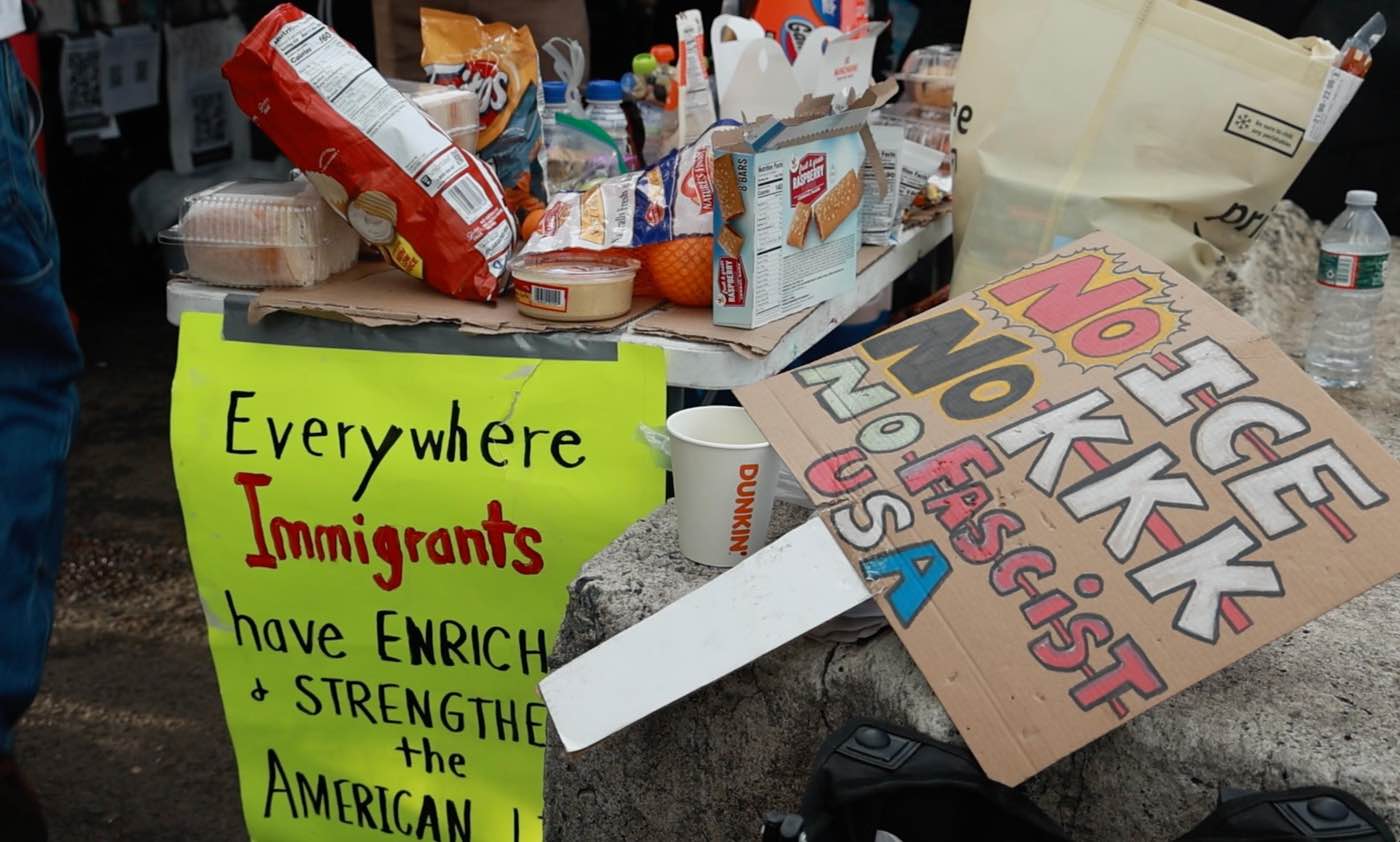
They’ve raised funds for people’s commissary accounts and for their families. The volunteer network has stepped up to meet every possible need that may arise, whether that be finding missing paperwork or bandaging up a paper cut. People are coming together to figure out how they can be helpful.
The recent confrontations in New Jersey represent one of the largest flash points of anti-ICE resistance since the explosion in the Twin Cities. What do you anticipate in the coming days and weeks?
I see the state making stupid choices that further intensify the call to resist. I see support networks maturing from uncertain vulnerable spaces to highly functioning machines. I see many, many people becoming radicalized in a way few ordinarily experience. I see those with a greater depth of radical knowledge welcoming in those less informed and raising them up, not gatekeeping or judging. I see people learning a lot of awful lessons about how to withstand a waking nightmare and figuring out how to remain soft and kind despite it and because of it.
How can people follow your work and support you?
You can support the strikers and their families here. You can find my links here.
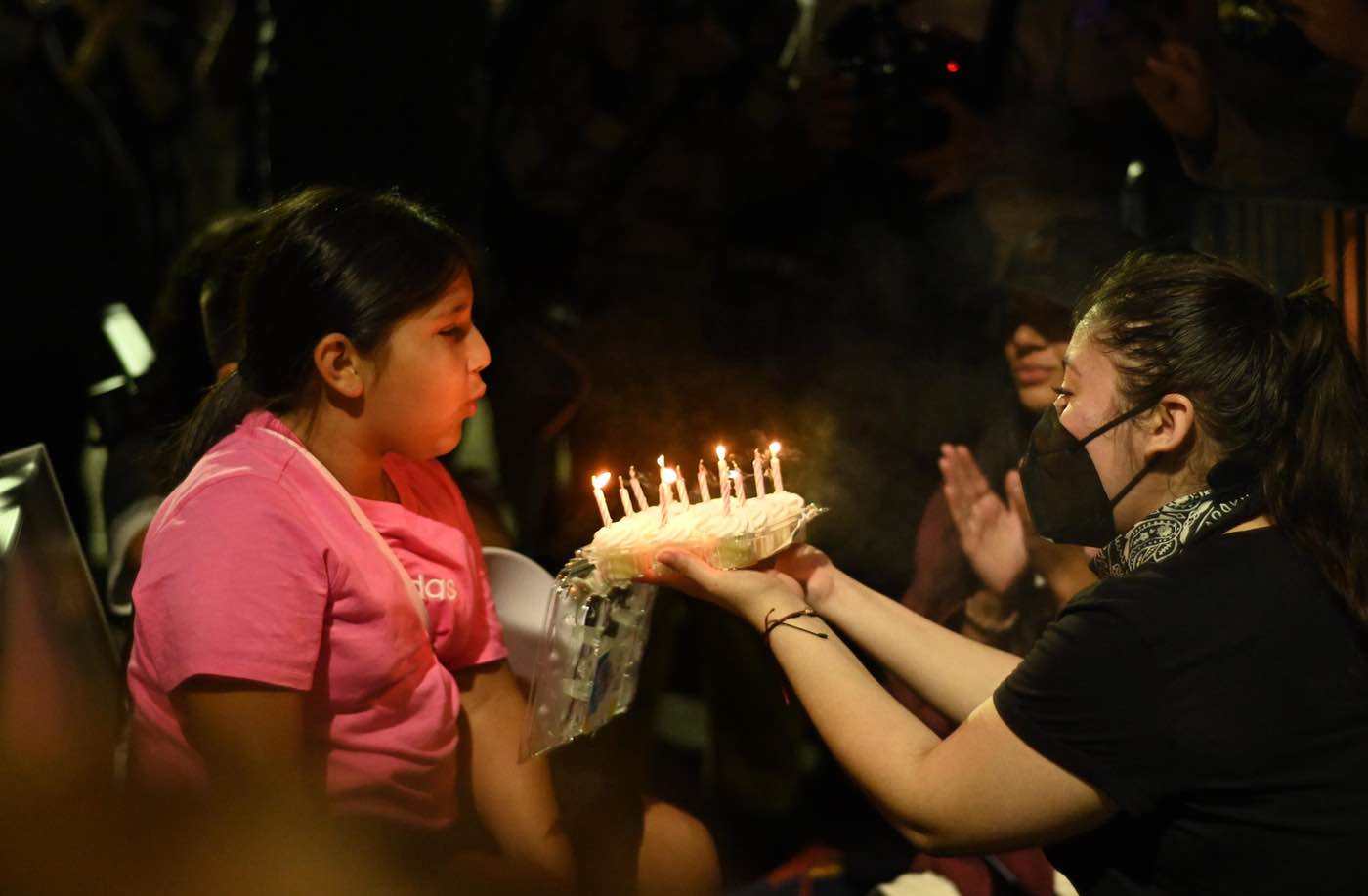
Celebrating a birthday outside the facility. ICE separates children from their parents. Resistance is a way of reestablishing our shared humanity.
Appendix II: Interview with a Protester
To include information about the events outside Delaney Hall up to the time of publication, we interviewed an anarchist who has participated in the protests in June. The protester chose to remain anonymous.
Can you describe what has happened at Delaney Hall in June?
On June 1, Newark Mayor Ras Baraka held a press conference outside of Delaney Hall in response to what he admitted was “unconstitutional” use of force by officers over the previous nights. A few people tried to disrupt the press conference, but Baraka closed it to the public. Newark police established hard checkpoints leading into the facility, completely closing access to foot and vehicle traffic. He announced that he would lift the curfew from Delaney Hall.
On Wednesday, June 3, about fifty protesters gathered in front of Delaney Hall. A “free speech zone” was set up in front of a driveway to the facility that had been closed. Newark PD guarded the other two driveways. NPD facilitated the entry and exit of ICE vehicles, getting into petty shoving matches with protesters who sought to stop cars from entering.
At some point, protesters noticed that ICE vehicles were leaving through a back exit. About fifteen people moved to the back of the facility to try to obstruct vehicles there. The back of the facility is a dimly lit street with no foot or vehicle traffic. Suddenly, six unmarked SUVs pulled up on the protesters and fully kitted-out agents leapt from the vehicles barking “GET ON THE FUCKING GROUND!” They did not identify which agency they were from. Several people escaped; the others were briefly detained and then shoved down the road and told to leave. ICE and Essex County Sheriffs arrested one person. Another was repeatedly slammed to the ground by ICE, causing an injury to the protester’s arm. An ICE agent reportedly pulled that protester’s mask back, said “Are you a fucking girl?”, and spat in their face.
On Friday, June 5, Mayor Baraka scaled back NPD presence outside Delaney Hall, having officers mostly monitor vehicle checkpoints at the north and south entrances to Doremus Ave. At 7:30 pm that night, the mayor instituted a “ban” on those wearing face coverings or carrying backpacks passing the police checkpoint to protest in front of Delaney Hall.
On Saturday and Sunday, June 6 and 7, with Newark PD having scaled back, a few dozen protesters clashed directly with ICE and GEO Group private security outside of Delaney Hall. On Saturday night, a few dozen protesters stood out in the rain and attempted to block ICE cars entering the detention facility. A few protesters have been followed by plain-clothes officers who photograph and occasionally handcuff protesters. These men do not identify themselves with any agency; they have not arrested anyone, only briefly detained those in masks as they leave.
What other strategies besides gathering outside Delaney Hall have supporters of the hunger strike employed?
To date, there have not been many other strategies apart from the demonstrations outside Delaney Hall. A few noise demonstrations have been called, one at the Attorney General’s office and one at Mayor Baraka’s house, though the latter was called off after the curfew was lifted.
The Democratic governor used the language of “outside agitators” to delegitimize demonstrators outside Delaney Hall, even though people are held there who have been arrested around the region. How have local participants in the grassroots organizing against Delaney Hall related to demonstrators from outside Newark?
This has not been a tension on the ground outside the facility. The charge of “not being from here” would be tone-deaf to levy outside a migrant detention center. A handful of people active in the anti-ICE struggles in Los Angeles, Chicago, and Minneapolis have come here to share lessons from those fights. This has been useful and appreciated by the crowd. We are in a nationwide struggle against ICE.
Further Reading
- “To Demand Freedom”: The Hunger Strike at Delaney Hall Detention Center
- Inside the Clashes at Delaney Hall Detention Center: A Timeline from a Mutual Aid Volunteer
On the Resistance to ICE in Minnesota
- Build It and They Will Come: A Report on the Melt the ICE Minnesota Week of Action
- Melt the ICE—The Fight Continues: Twin Cities Protesters Blockade ICE Inside the Federal Building
- They Escalate, We Escalate: A Short History of the Fight against ICE in the Twin Cities
- Filter Blockades: A Tactic from the Twin Cities to Fight ICE and Defend Your Neighborhood
- The Noise Demonstrations Keeping ICE Agents Awake at Their Hotels—A Model from the Twin Cities
- Minneapolis Responds to the Murder of Alex Pretti: An Eyewitness Account
- Protesters Blockade ICE Headquarters in Fort Snelling, Minnesota: A Report from an Action during the General Strike in the Twin Cities
- From Rapid Response to Revolutionary Social Change: The Potential of the Rapid Response Networks
- Rapid Response Networks in the Twin Cities: A Guide to an Updated Model
- North Minneapolis Chases Out ICE: A Firsthand Account of the Response to Another ICE Shooting
- Minneapolis Responds to ICE Committing Murder: An Account from the Streets
- Protesters Clash with ICE Agents Again in the Twin Cities: A Firsthand Report
- Minneapolis to Feds: “Get the Fuck Out”—How People in the Twin Cities Responded to a Federal Raid