A Letter to Carlo Giuliani
:On the 25-Year Anniversary of the Battle of Genoa


On July 20, 2001, at the peak of the movement against capitalist globalization, hundreds of thousands of people gathered in Genoa, Italy to oppose the summit of the eight most powerful governments in the world—the G8. During the massive demonstrations that ensued, a police officer named Mario Placanica shot and killed a 23-year-old demonstrator named Carlo Giuliani.
The following text was written by Tomas Rothaus, a fellow participant in the battle of Genoa.
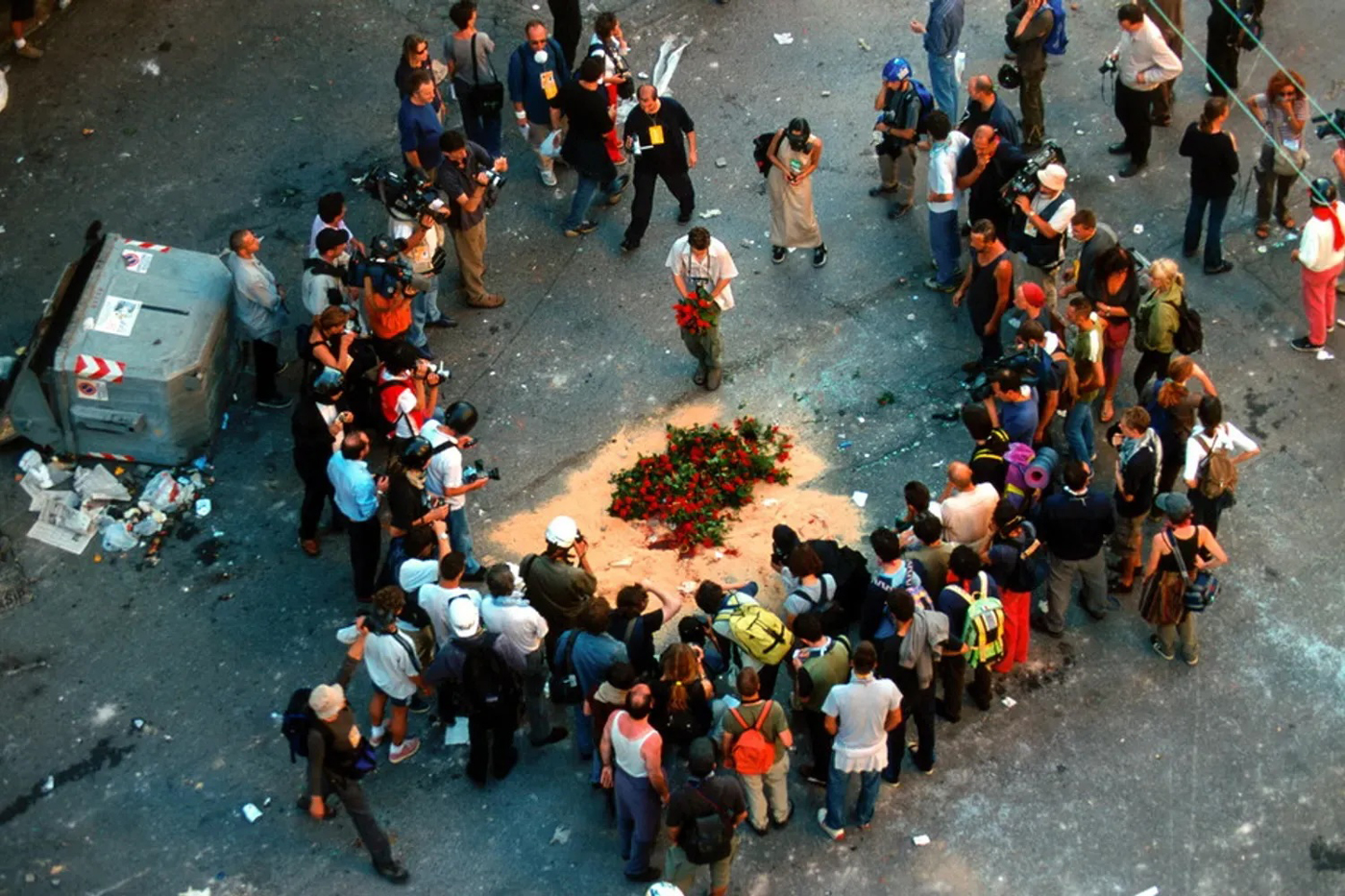
A memorial at the site where Carlo Giuliani was killed, not long after his death.
If we are speaking seriously of revolution, then we need to take a serious look at history and see what the consequences are, not only if we fail, but even if we are triumphant. Revolutions mean blood, death, and suffering. If we are not willing to accept this, then we should not be calling for them.
—“The Lessons of Genoa.” Barricada #8. Summer/September 2001
I wrote those words once upon a time, Carlo, when your blood was still fresh on the pavement and your name still in every newspaper and on every television. I published them in our anarchist journal, Barricada, and I continue to stand by them. But please don’t misunderstand them. I’m sorry you’re gone and I experience your death as a tragedy. I think about you to this day more than you could imagine. Hopefully, I’m not alone in that regard.
For years and years, as long as I could, I made sure that every July 20, we directed the rage that we carried for you in our hearts against our enemies. In the random cities of whatever country I happened to find myself in, we made sure that Molotov cocktails lit up the night, that it rained stones in the dark against banks, that we ambushed cop cars, that we etched your name upon the walls of Boston, Goettingen, Paris, Berlin. Sometimes, to celebrate your life and not your death (as well as to throw off the cops), we chose to avenge you on your birthday, March 14, rather than the day of your death.
Today, decades after that 20th of July of 2001, I’m often reminded of you in the most unexpected ways. I’ll see a person in their forties. Decently dressed, tidy, maybe wearing a business suit or some kind of work uniform. A human just old enough to look worn from the inevitable stresses of life, love, and labor, but young enough that their youthfulness still shines through from behind the five o’clock shadow and incipient beer belly. Because when I see this random person, any random person, who is about the age you would be today, I’m reminded of the day when the cop’s bullet took away your life—and your future.
I’m not as outraged by your death as I am by all the life you were robbed of.
We had an affinity in battle, and it was only fate that put you in that particular battle, on that particular plaza—the one my friends and I happened to not be at. The one time on that particular day that the police aimed their bullets not at the sky, but at the head of a human being. Your head.
From what I’m told, if we had lived in the same city, chances are good we wouldn’t have gotten along very well. I’m told you were one of Genoa’s punkabbestia, which (from what I understand) is like the chaos punks or street punks we had in my cities. Not particularly organized, sometimes dropping in on political meetings but definitely not an activist, militant, or any kind of cadre. The Tute Bianche, whose words to this day I’m obviously still reluctant to take at face value, called you “not particularly political.” They said that you used to spend your time at the Piazza Delle Erbe, where you would “beg and hang out with friends and stray dogs.” All of which I have nothing against—but we all know that the street punks and the obsessive young orthodox anarchists often didn’t get along very well.
None of that matters, though. What matters is that they froze you in time. You will forever be a young street punk, if that’s indeed what you were, robbed of the opportunity to do whatever it is that brought you joy and made you feel whole as a person in the years and decades that should have still been left in your life. Maybe your youthful rebellion would have eventually faded, you would have finished your university studies, gotten a degree, moved on, and looked back with disdain at your days on the streets as a rebel and an outcast. Or maybe you would have looked at them with wistful nostalgia, as a healthy chapter you went through in your life before assimilating, getting a good union job thanks to your dad’s connections, starting a family, and throwing a coin toward the next generation of punkabbestia as you passed them on the streets that used to be yours. Or, who knows, maybe you would have become an old punk, graying but still free, dog at your side, panhandling on the streets of Genoa to this very day.
But you were robbed of a future, so you will never be any of those things. You won’t betray us, you won’t move on, you won’t walk among us. And, even if my adventures hadn’t exiled me from Europe and I could find myself in Genoa once more, we’ll never reminisce together about that hot, sunny summer day when you could have gone to the beach but instead, outraged at the police invasion of your home, joined us in battle.
You’ll never have a chance to move on, regret your choices, denounce the excesses of your youth, or spend your entire life staying true to them. You’ll forever be, as your best friend Daniele remembered you just a few days after your death,
“someone who had that evil inside, the one that is here in the air, that we all have. He didn’t fit in the society, in the system. He suffered a lot, and since he was more sensitive than us, more generous and kinder, he was also more fragile.”
Forever a twenty-three-year-old, just a few short years beyond a teenager, looking at us through an aging photo, or reminding me of the brutal price of rebellion as the picture of you lying in a pool of blood flashes constantly in my head.
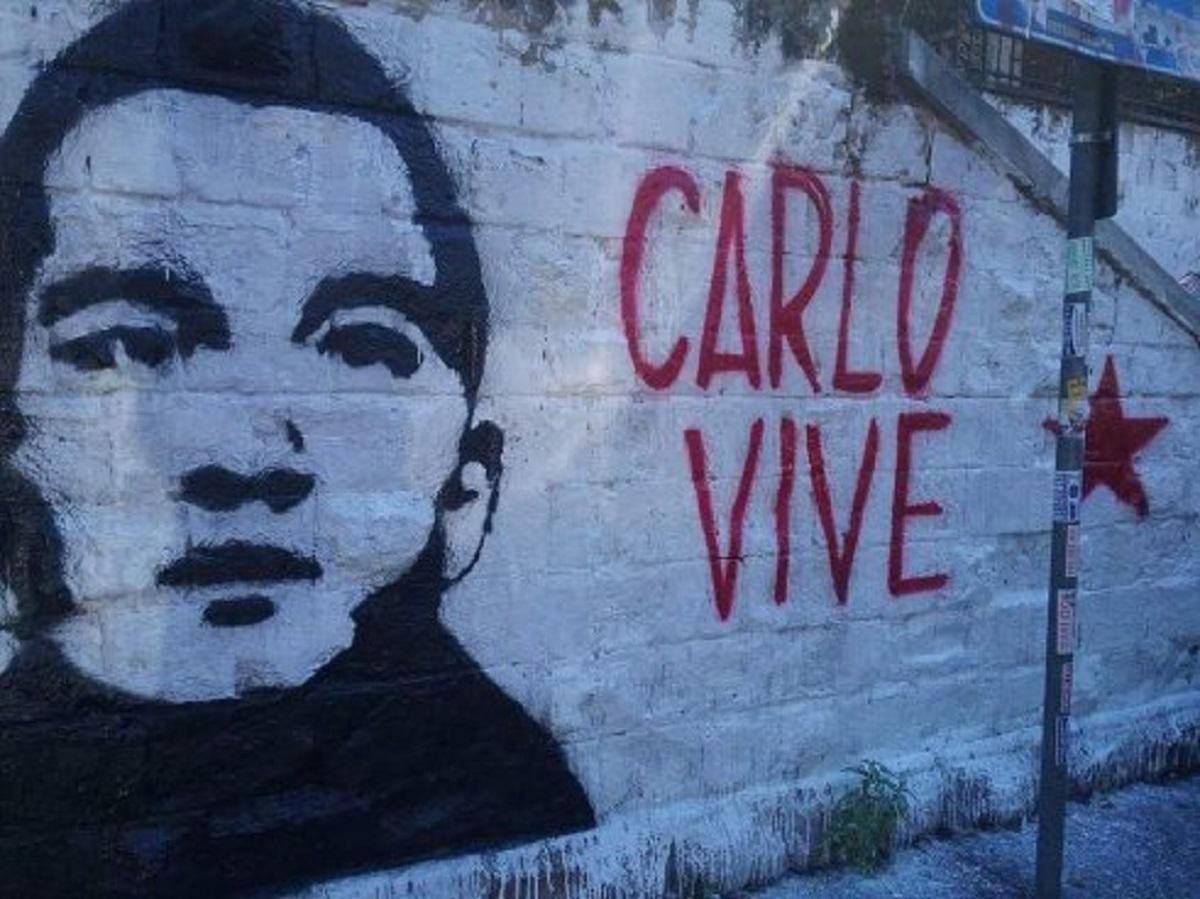
Just as I’m outraged that you were robbed of whatever future you were yet to choose, I’m alarmed as I see your memory fading in time from the collective consciousness of those who came after you. I don’t even know why I’m addressing you in a letter. I don’t believe in the afterlife, and I doubt you did either. Maybe it’s my desperate way of grasping at a sense of control over what seems inevitable: that time eventually devours us all. That, while the circumstances may be different, both death as well as the passage of time will one day come after me just as they came for you. Still—and here I assume we’re also similar in spirit—just because it’s inevitable doesn’t mean it’s going to stop me from trying to prevent it.
Yet many years have passed, Carlo, and I’ve had to lay down my weapons as well. So, since I can no longer do my part to keep your memory alive with action, here we are: a godless anarchist writing a letter to a dead street punk. Hoping others will read it and inquire about you, and about the conditions, dreams, and adventures that led to the rising tide of our movement, and the wave that swept your life with it that day. It’s the only useful weapon I can find in my arsenal today to fight the idea that you will be forgotten, just a footnote in a distant clash of a long-forgotten movement. Your face, your hopes, your dreams, and eventually your name just fading into the history books.
We’ve been fighting the battle for your memory since the day you were killed. We’ve tried our best to be fair to it. To not assign you roles or aspirations you might have rejected. But it hasn’t been easy, and I apologize if we didn’t represent you as you would have liked. In Barricada, we boldly and without hesitation branded you an anarchist, never knowing if you identified with the word. In our defense, you can’t imagine what those hours, days, weeks, and months after you died were like.
There were some among us, well-intentioned but misguided, who hallucinated you into an organized anarchist militant. A frontline fighter of the black bloc. They wanted to turn you into a willing martyr who gladly laid down his life for the cause. But I know you didn’t choose this, because you were close to not even showing up that day. More importantly, because none of us do. Unlike fascists, we celebrate life, not death.
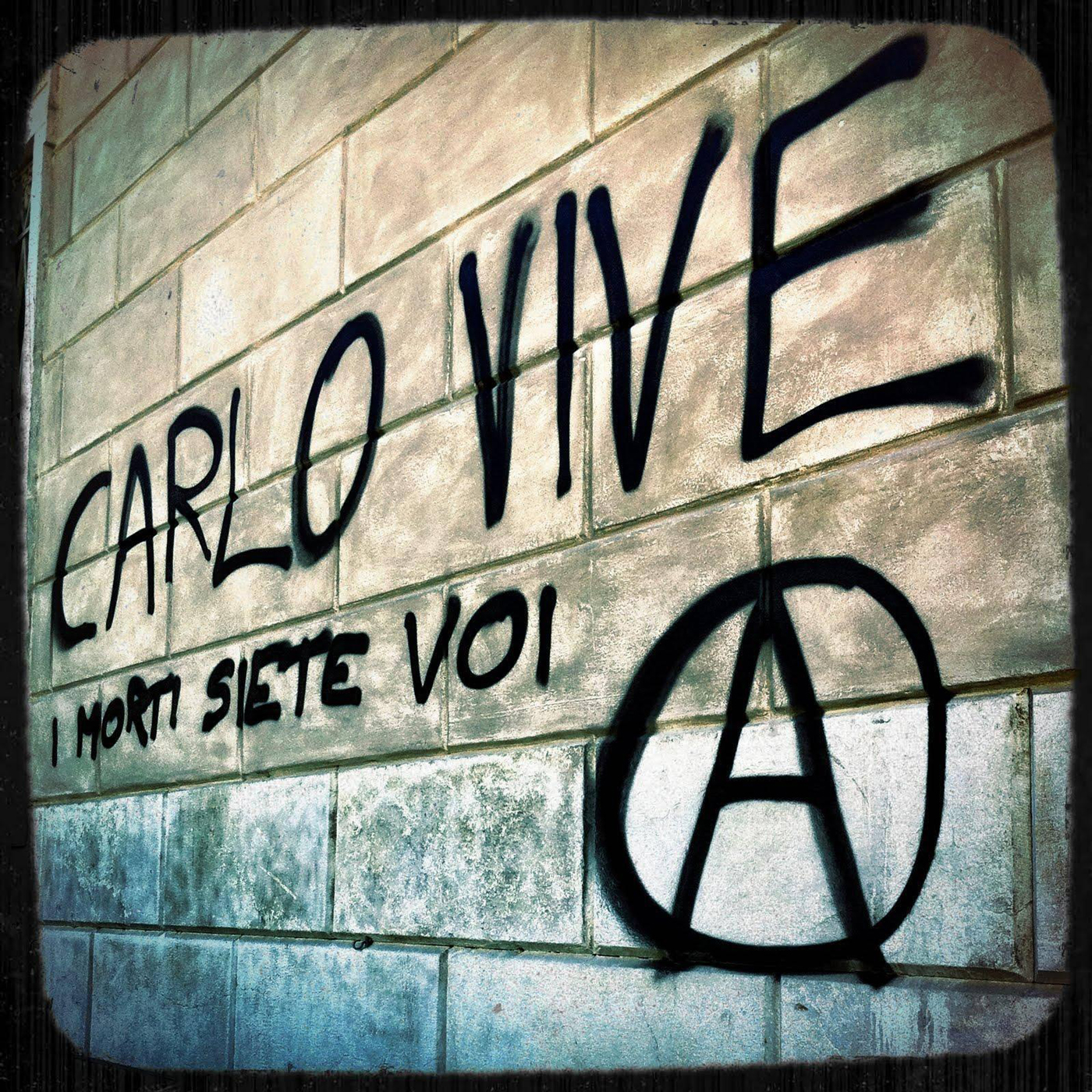
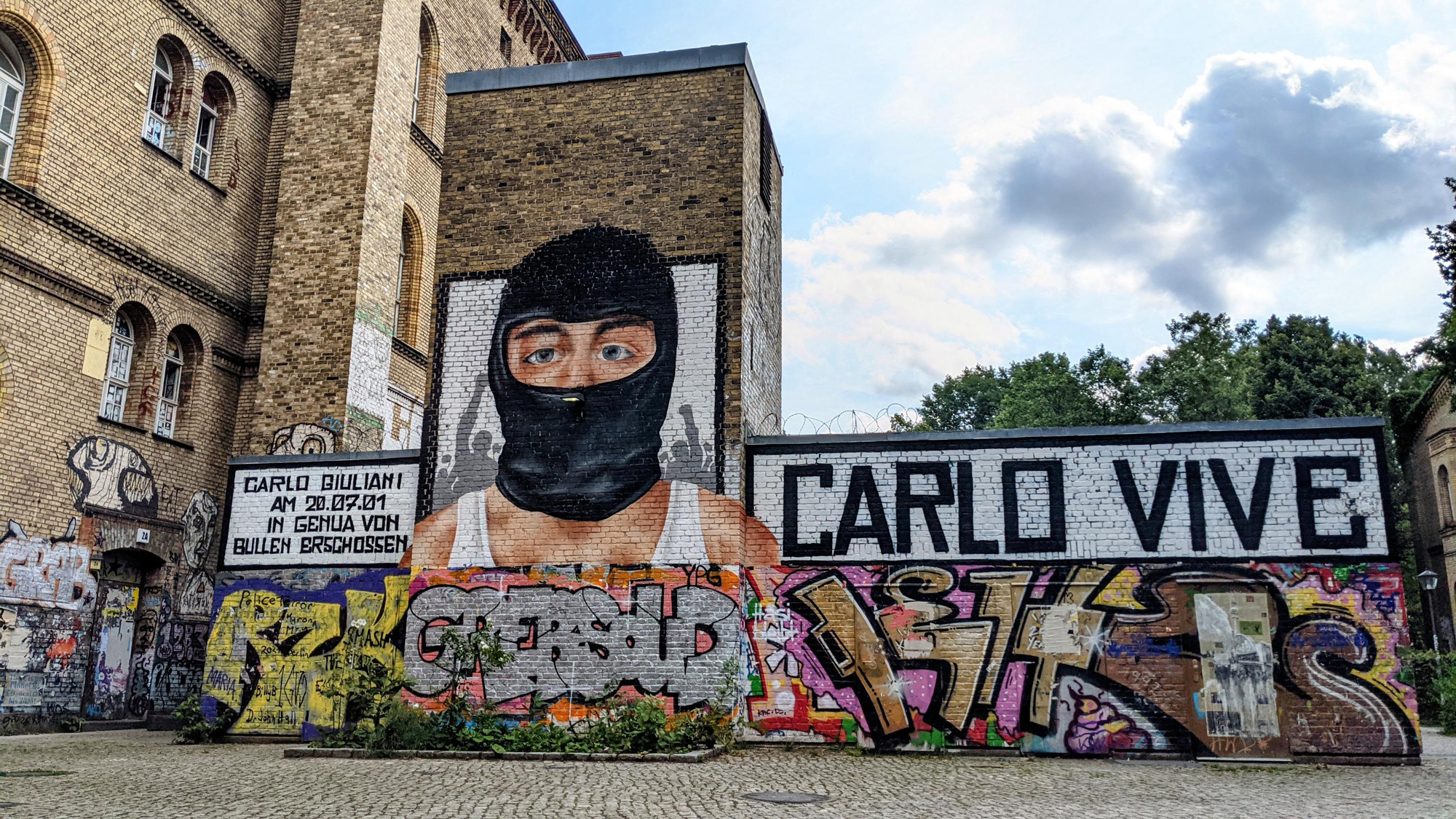
“Carlo lives—it is you who are dead.”
Then there were the pacifists and the reformists. These days, I try to steer clear of the hyperbolic anarchist sectarian language of my youth, but when I remember them—their actions and their words when talking about you—it comes roaring back. If you could have seen the crocodile tears of the scum of that movement! They invoked your name, pretended to hold high your memory—but they celebrated and remembered you only because you died. Those of us who acted with you, like you, who were your comrades on that day but whom fate didn’t place in the way of a cop’s bullet that afternoon in Plaza Alimonda—they denounced us. They said we were responsible for the violence, that we had brought the rage of the state upon the good demonstrators. That indirectly, we were the ones who were responsible for your death, not the state, not the cop that fired the gun. They spread absurd conspiracy theories that the black bloc and the massive, generalized, dignified resistance were the work of undercover cops and fascists.
Adrift in the parallel reality that their narrative created, they tried to attack us, tried to expel us from the movement, pushing us out toward the cops, calling us fascists and hooligans. And the next day, as we set out to avenge your death, they directed their chants of “Assassini!”—murderers—at us just as much as at the cops. They, too, made every attempt to claim you as a martyr of their movement, but in their case with the incredible cynicism and hypocrisy of vindicating your memory while denouncing all the others who acted as you did. To them, you were better dead than alive. A hooligan in life, a martyr in death.
The ATTAC folks, the Genoa Social Forum, the Tute Bianche, the parties, the reformists, and the whole alphabet soup of aspiring managers of discontent—all of them tried to make you into a victim. A hapless and misguided youth, murdered by the state. They wanted to deprive you of agency—as they often do with those whose choices they can’t understand or don’t respect. I’m still not sure how much of it is cynical opportunism and how much of it is that they actually can’t conceive of any form of struggle beyond political maneuvering and mediated clashes. So every time we put the cops on the run—every time we opened up enough fronts to keep them at bay, so that some of us had a chance to calmly deconstruct the landscape of capitalism and take much-needed and much-deserved breaks between battles, lounging on the bank furniture we had set up in the streets with the leisure of a backyard campfire—they hallucinated some grand police master plan to justify repression against the whole anti-globalization movement. Those of us who lived were fascists, hooligans, and provocateurs, while you, by virtue of dying, became a victim and a martyr. They simply could not accept that the rebellion in Genoa was not only organic and authentic but also successful.
You died precisely because, on that day and in that moment, we were succeeding. The cops were retreating. I don’t know if you ever knew it, but it wasn’t just there on the Piazza Alimonda—they were on the run throughout the entire area. I know this will be controversial, but given the circumstances, I’m not even sure that it’s correct to say that they “murdered” you. I’ll spare us both the voyeuristic reconstruction of the minutiae of your final moments. There were years of endless discussions about whether the bullet hit you directly or ricocheted off of something, whether you were throwing the fire extinguisher or just holding it. The soldier who shot you was eventually found to have acted in self-defense and acquitted of any wrongdoing. I’m also not so sure that it matters, honestly, aside from the need of many comrades, even anarchist comrades, to seek out the role of victim of police brutality, as if positioning ourselves in the role of perpetual victim in the face of the big bad state would lend us some moral high ground in the eyes of broader society. It’s defeatist and I hate it, as I assume you would too. The justice we were looking for was never that of the state and its courts.
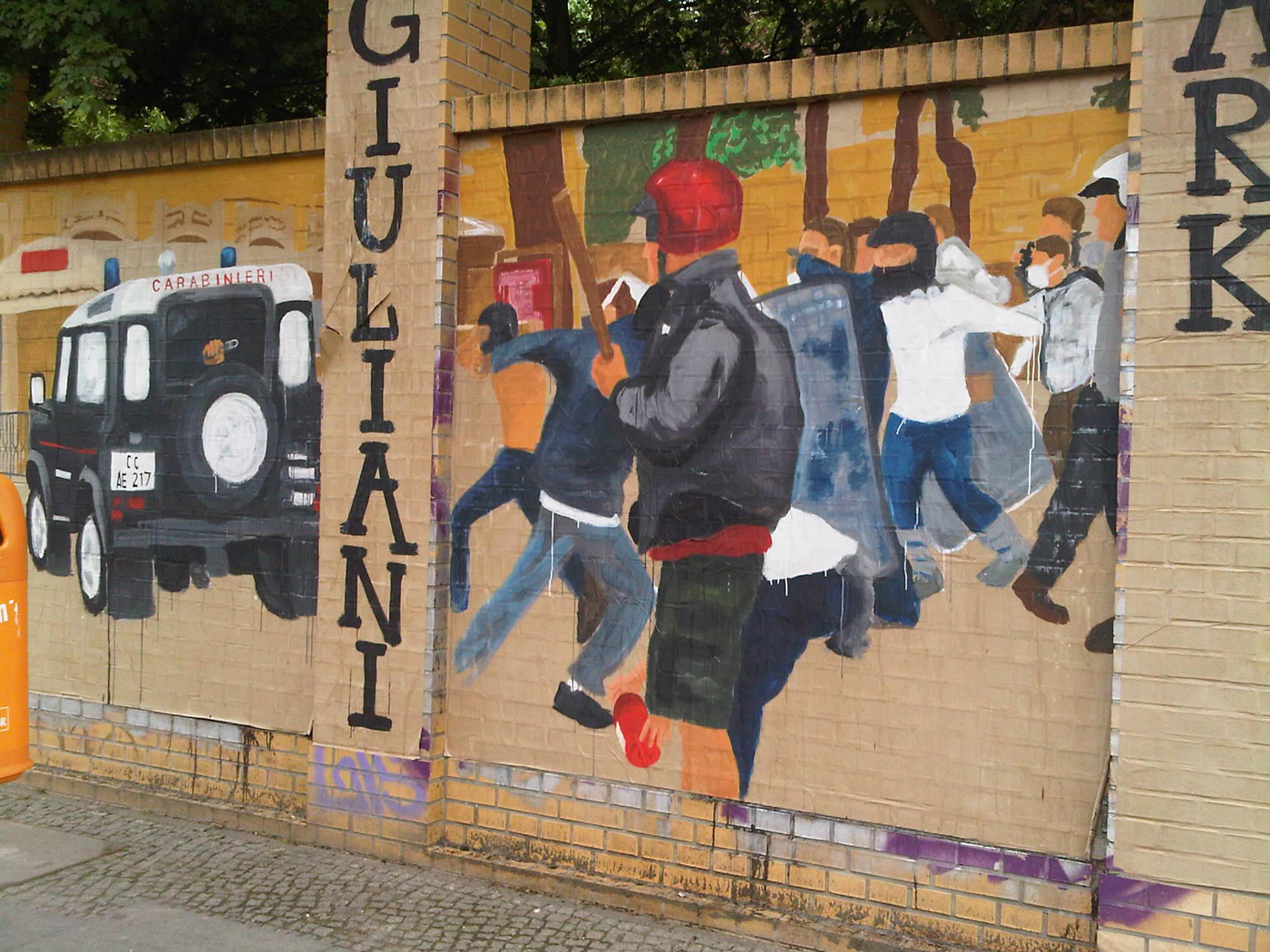
Carlo Giuliani Park. Photo by Pinciolola.
Speaking of fear, this is what the soldier who shot you, Mario Placanica, said to the judge shortly after killing you:
“I fired because I was afraid of dying. I don’t know what happened. I remember they were surrounding us, attacking us, that the jeep was an inferno. My hands were shaking and I fired without looking outside.”
Don’t misunderstand me—I’m definitely no friend of cops or soldiers—but I don’t have any difficulty believing him. At the time, he was twenty years old, barely more than a teenager, sent out into the streets of Genoa that day after being told by his superiors to “be on the lookout” because demonstrators would be “throwing bags of infected blood” and that there would be “terrorist attacks.” He said, “The feeling was as if we were going to war.”
I’ve been in similar situations, including elsewhere in Genoa on that very same day. I’ve stood in the place you stood, but at a different time and in a different place, and looked into the eyes of the uniformed person in front of me. If I were the cop or soldier, I too would be afraid. Perhaps I too would pull the trigger, especially if I were a young soldier, a believer in God and country, facing an advancing and seemingly uncontrollable horde of masked anarchists.
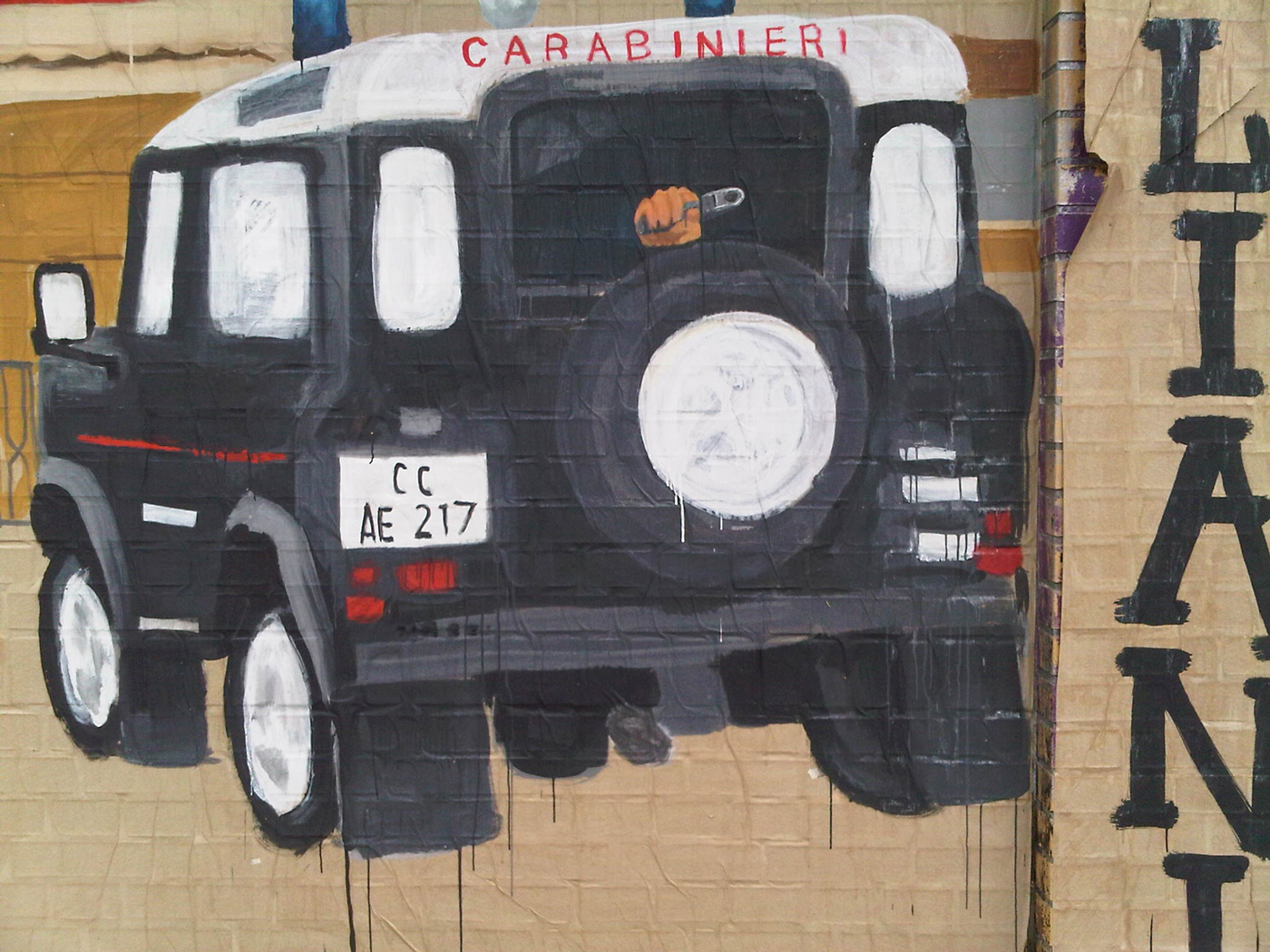
Carlo Giuliani Park. Photo by Pinciolola.
For what it’s worth, the man who killed you is a shell of a human being now. Let go from the carabinieri in 2005 due to psychological problems, today he represents himself as a “destroyed, lonely, and consumed man” who battles depression.
Unsurprisingly, I have next to no sympathy for his plight. But is he personally a murderer? I don’t know. We could never really make up our minds about that—so much so that the back cover of the issue of Barricada that we published immediately after the battle of Genoa, which was dedicated to you, in which we vowed to avenge you, includes the line “Carlo was not a victim of police brutality” while also proclaiming, “They murdered an anarchist.”
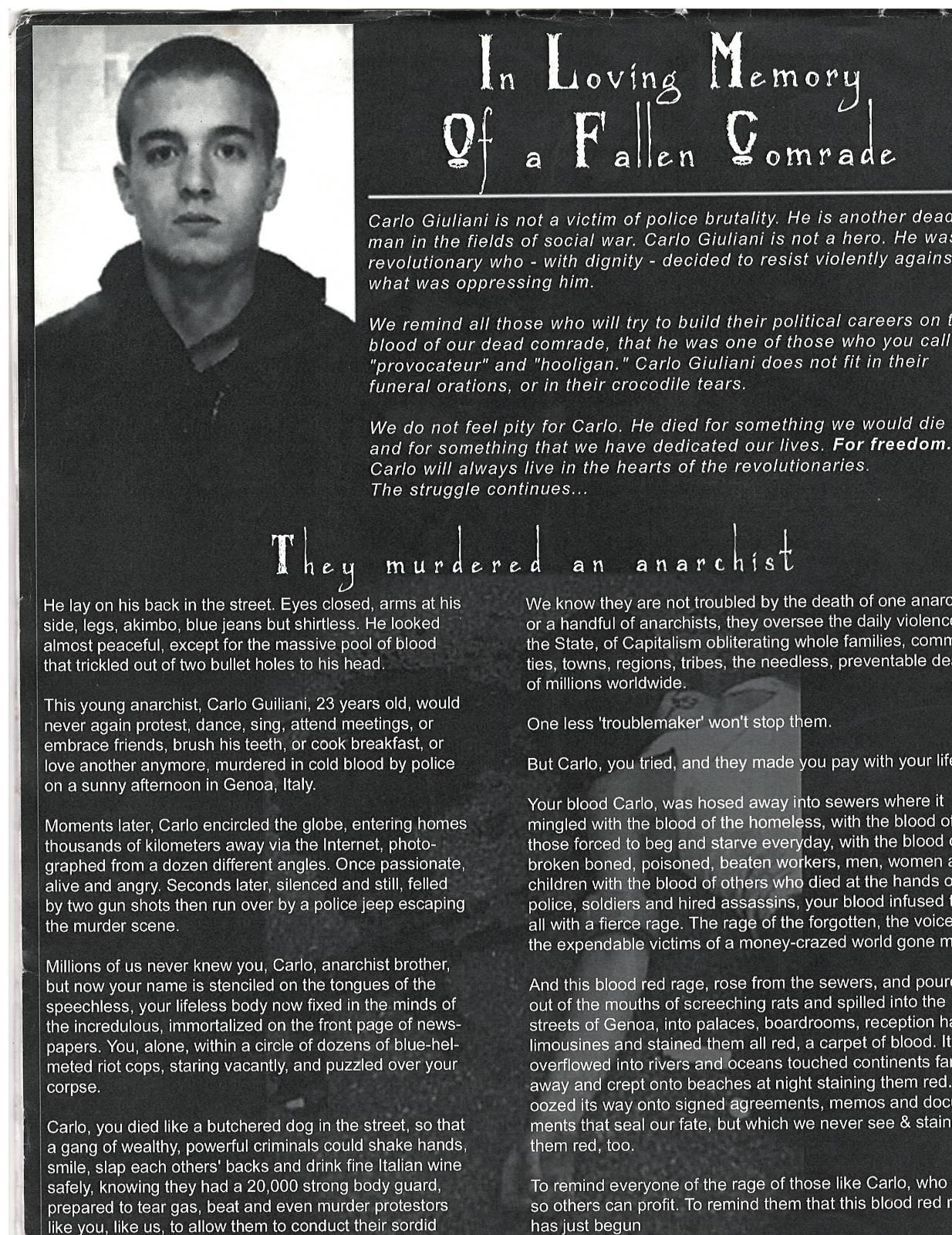
“In Loving Memory of a Fallen Comrade.” Barricada #8. Summer/September 2001.
As much contempt as I hold for the man who killed you, a few years ago, he said something that helps me to understand why I, like so many anarchists, identified so strongly with you and felt your death so personally and passionately:
“That day for me remains a trauma, trauma for the death of a boy like me, also a victim on that tragic day. I am not an executioner, I am not a vigilante. That day I did not hold the gun for Mario Placanica, I held it for the Carabinieri, for the Italian state.”
For a moment, let’s ignore the wallowing self-pity and false equivalency of how he paints himself as a fellow victim, since we both know that he was a not a conscript but a professional who willingly chose his profession. He is nonetheless correct that it was the Italian state that put the gun in this child soldier’s hand and gave him free rein to fire it against whose who rebelled. They shot you because you were “one of us.”
“One of us.” We spray-painted that on walls for years. One of the thousands and thousands on the streets of Genoa that day who chose to rebel. One of us, one and the same, regardless of what political label we slap on ourselves, regardless of whether some spend their days editing anarchist journals and plotting actions while others spend their days panhandling and hanging out with their dogs on the streets of their city.
One of us. All of us, regardless of our more specific motivations, were there on that day because we saw this world as broken and refused to stand idly. You chose to rebel, just like us, a rock in your hand, your face masked, unbowed in dignity. No intermediaries, no staged or managed or curated spectacle of rebellion catering to the imagined tastes of the masses. Just your body as a weapon and the comrades who stood by your side as your strength. You chose this path not to die, but to live. Because you wanted to live, free and unchained.
So free, so unchained, that I know that our affinity probably only existed in the streets, in combat against those who we recognized as our common enemies. I won’t be striking any nostalgic notes here as to what a wonderful human being you were, although your dad says you gave him “the strength of your ideals” and taught him to not judge people by “a ripped shirt, holes in their pants, or colored hair.” There will be no grief voyeurism here; the press vultures did enough of that back in the day.
One of us. Maybe not an activist or a militant, not a cadre of any organization or structure, but one of us because you chose to fight. To fight alongside us, side by side. One of us—and that’s why they shot you. We all know that the bullet that found you could just as easily have found any one of us. It was meant for any one of us, for all of us.
Over the months and years that followed your death, I came to understand just how painfully and viscerally true this is—as comrade after comrade fell to the bullets of the state or the knives of the fascists. The same year you died, the state unleashed a storm of bullets that killed dozens in Argentina. I couldn’t help remembering you as I took cover behind our improvised barricades, not knowing if the bullets speeding towards us were rubber or lead. Years later, when a cop murdered a fifteen-year-old anarchist in Athens, many of us who shared the streets with you in Genoa rained fire on the cops outside the occupied Polytechnic. You were on our minds then, as well.
What I’ll say next might sound contradictory, but it will make sense to other combatants. After many years, I’ve concluded that that is what we are—combatants. Of course, we don’t go to war, and I don’t pretend that we are things that we are not. It is true that there is no comparison between the risks associated with the conflicts we participate in and the conditions of actual warfare. But my life experiences and the experiences of those around me involve constant proximity to death, prison, serious injury, exile. These are not the experiences, the traumas, that most civilians experience in this part of the world—at least, not yet.
As a combatant, I believe two things simultaneously, even as they sound contradictory.
First, your death was tragic. I wish it had never happened. We have tried desperately to avenge you—both out of principle and also as a matter of basic self-defense. To send the message to the state that the blood of rebels, of anarchists, carries with it a steep price.
But at the same time—and this is where a lot of people didn’t see eye to eye with us—was your death unexpected? Probably not. Should we call it murder? Maybe in the broad sense, but the question seems almost irrelevant. Above all: was your death a reason to stop our efforts? Absolutely not. Rebellion is important. But rebels die, particularly when rebellions start to succeed and the state begins to take its enemies seriously. And when the state takes their lives, I miss them, and love even those I never met.
It sounds like demagogy to say you miss a person who you’ve never met, and who you probably wouldn’t even have gotten along with well. But I do. I miss you like I miss Dax and Carlos, taken by fascists’ knives in Milan and Madrid; like I miss Clement who fell fighting fascists in Paris; like I miss Pocho Lepratti in Buenos Aires, Alexis in Athens, and Tortuguita in Atlanta, all taken by the bullets of the police. Or like I miss that kid in Goettingen who came into our info shop one day, whose name I can’t even remember, who I’m ashamed to say I never took seriously, who went on to lay down his life fighting against Islamic fascism and for revolution in Rojava, like so many other international volunteers. I miss them and every other comrade gone, because those bullets and knives were aimed at all of us. I miss them because they were all part of the struggle for a common idea. I miss them, as I miss you, because while I may not know the person, I know the kind.
Carlo, I didn’t know you, but I’m sorry you’re gone. I never met you but I miss you. I’ll forever be holding high your memory and trying to avenge your death, because the blood of our comrades does not come cheap. And while I still can’t find the optimism to believe in a conveniently beautiful afterlife, I can’t help but hope that you’ve smiled down approvingly upon our efforts.
This text is adapted from the book From Riot to Insurrection: The G8 Summit of 2001 & The Battle of Genoa by Tomas Rothaus.
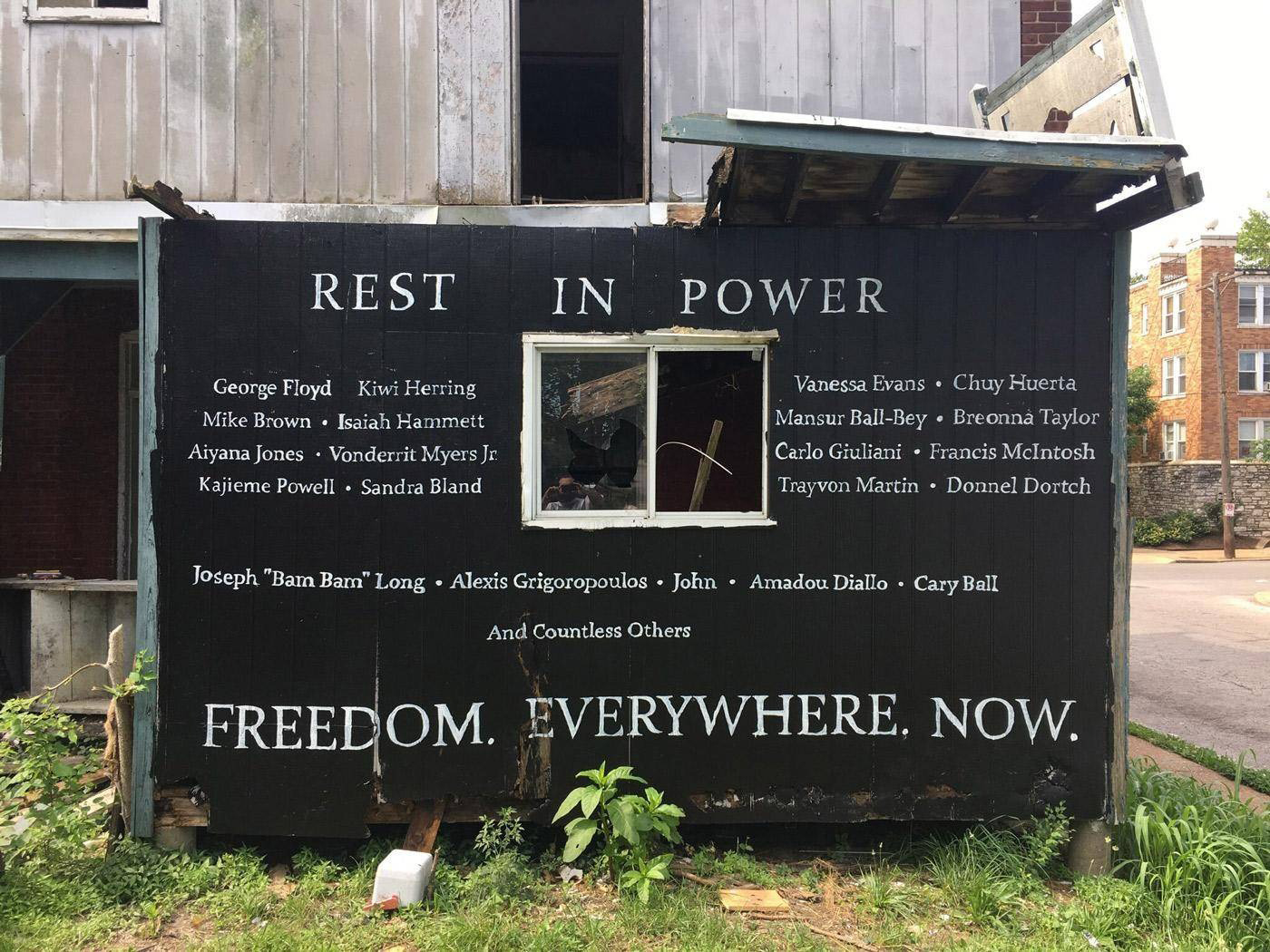
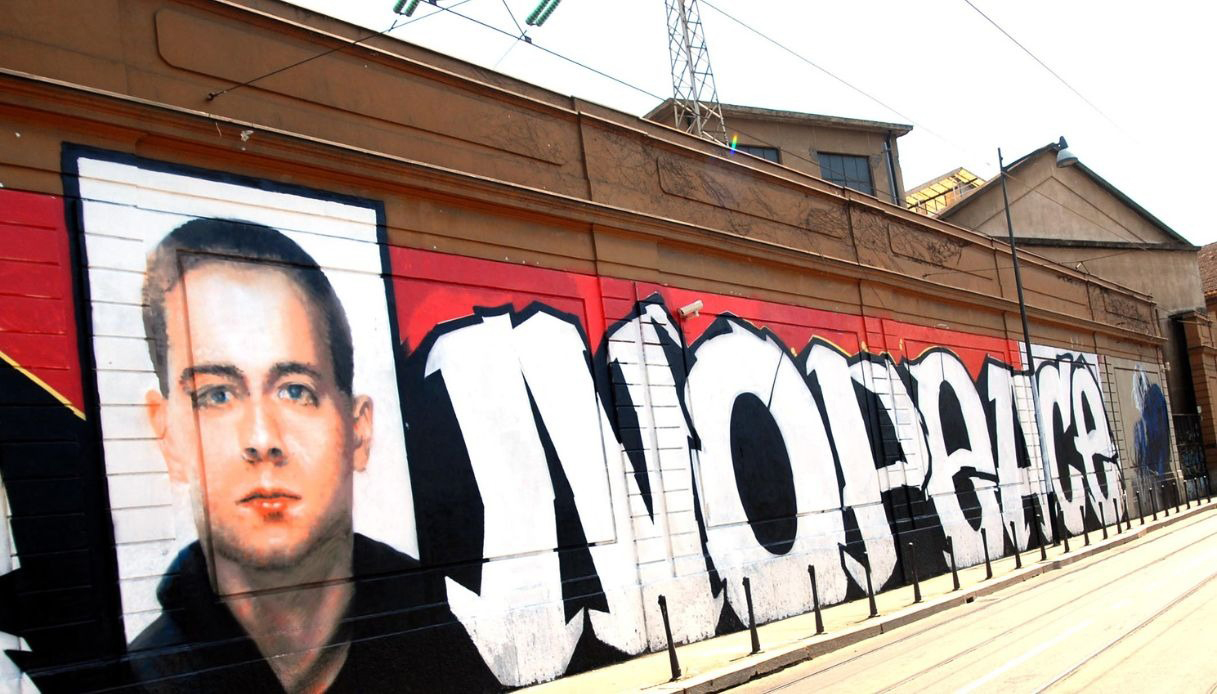
This mural in memory of those killed by police appeared during the George Floyd Rebellion of 2020 in south St. Louis, only a few miles from Ferguson, Missouri, the site of the historic uprising of 2014.